


- Beranda
- Berita Luar Negeri
Haunting Fukushima images taken by Chernobyl filmmaker 5 years after nuclear
...


TS
hahaiyaa12
Haunting Fukushima images taken by Chernobyl filmmaker 5 years after nuclear
Haunting Fukushima images taken by Chernobyl filmmaker 5 years after nuclear disaster
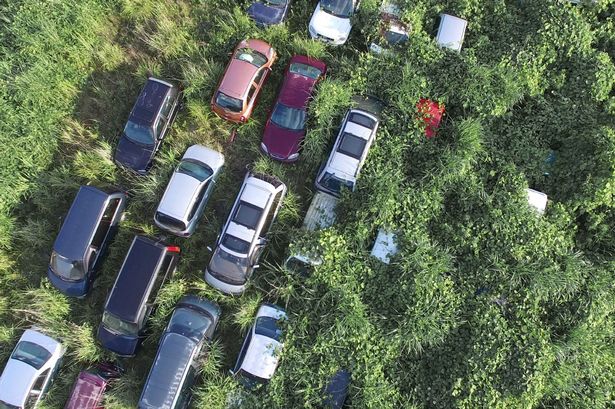
Nature's creep: An aerial photograph of abandoned cars, taken by a drone
Empty streets, overgrown cars and acres and acres of binbags filled with contaminated soil - Fukushima is an area abandoned and heading slowly back to nature.
On March 11, 2011, an earthquake and subsequent giant tsunami devastated the Japanese prefecture on the Pacific coast.
The wall of water reached the tops of tower blocks and rolled as far as six miles inland.
A Chernobyl-style catastrophe was averted but five years on, the impact of the incident on the country has been captured in sensational images.
Read more: First footage from inside Fukushima reactor taken by 3D printed robot
Photographer Arkadiusz Podniesinski was braced for what Fukushima had to show him, having visited Chernobyl in 2008.
The Polish filmmaker also made a documentary when he went to the site which was hit by a nuclear disaster in 1987, The Zone in 4K, which featured footage of the abandoned town of Pripyat, Ukraine.
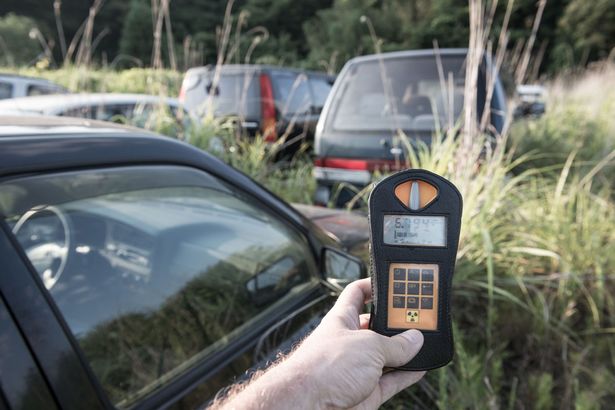
Measure of the site: A radiation reading of 6,7 uSv/h shows the elevated levels
The natural disaster made 470,000 people homeless but many were evacuated safely, and it was only in the aftermath that the real horror unfolded – one of a nuclear nature.
The back-up generators for the cooling systems at the Fukushima Daiichi nuclear power station were flooded and several reactors went into meltdown.
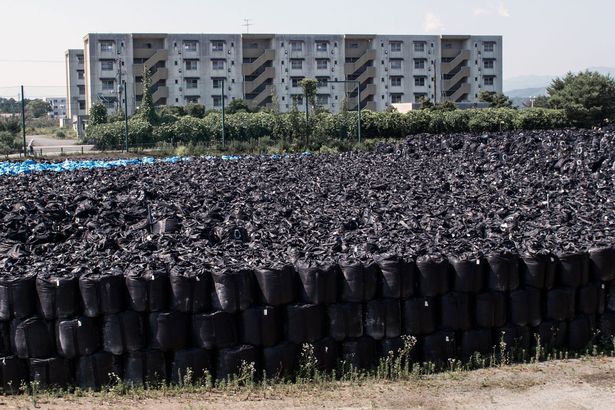
Bagged up: Dump sites with sacks of contaminated radioactive soil are usually located on arable land
But his images, he says, were not intended to retread the details about the accident that we already knew.
"More than 120 000 people are still not able to return to their homes, and many of them are still living in temporary accommodation specially built for them," he writes on his blog .
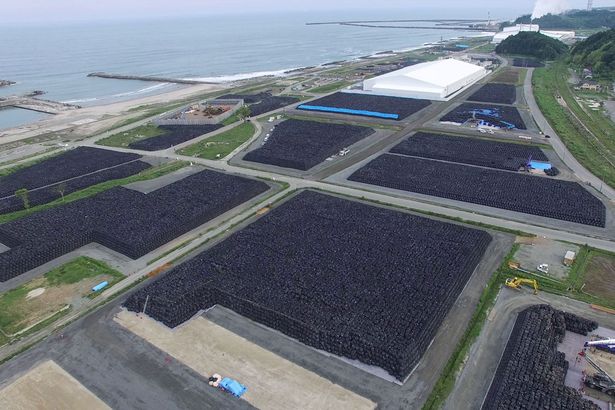
Waste storage: To save space the soil bags are stacked in layers, one on top of the other
"The zone with the lowest level of radiation is the green zone, and decontamination work has been completed here. Now the clean-up is in its final stages, and soon the evacuation order is to be lifted."
Despite all of the work which has been done in five years, there are stil many markers of what has occured.
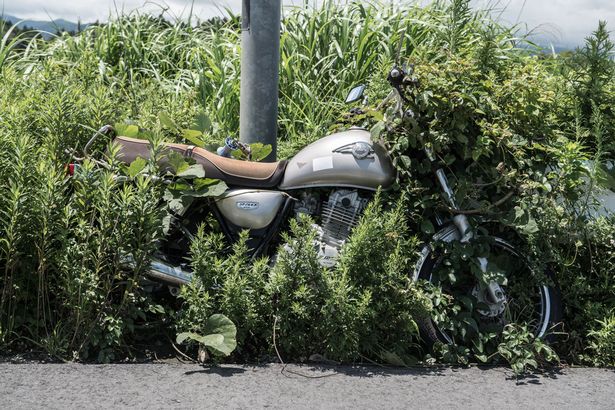
No go: A motorbike left next to a lamppost in 2011, weeds having grown over much of the bike's wheel
Large swathes of black sacks filled with soil mark the landscape, as the authorities are removing the top, most contaminated layer of soil and taking it away to many thousands of dump sites.
"The sacks are everywhere. They are becoming a permanent part of the Fukushima landscape," Arkadiusz explains.
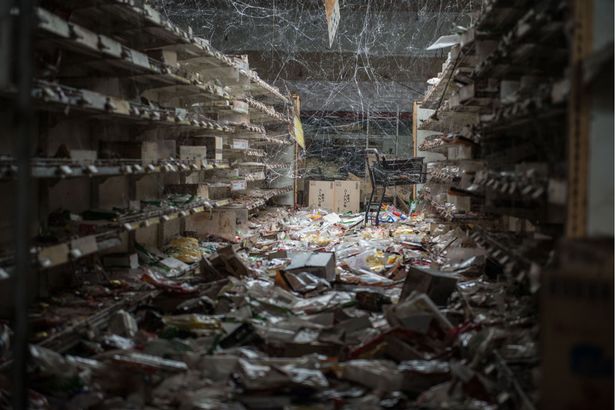
Shop floor: A supermarket with products left on the floor and cobwebs hanging between the shelves
When he visited the red zone, he found some vehicles which surprised him.
"In the vicinity of the red zone I happen to notice an abandoned car. It is hard to make it out from a distance, it is almost completely overgrown with green creepers.
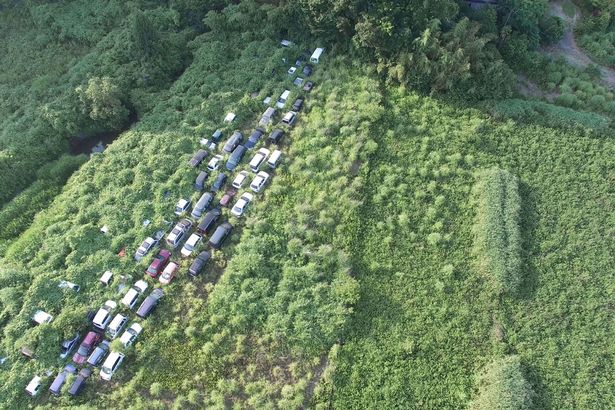
Parking space: The hidden vehicles were abandoned before the disaster and have never moved
"When I get up closer I notice that there are more vehicles, neatly organised in several rows," he says, clarifying that the cars were abandoned before the disaster but were heavily contaminated during it.
Wrapping up the project, Arkadiusz said that his investigations into Fukushima and how it is now will never be over, and he had pledged to revisit in the future.
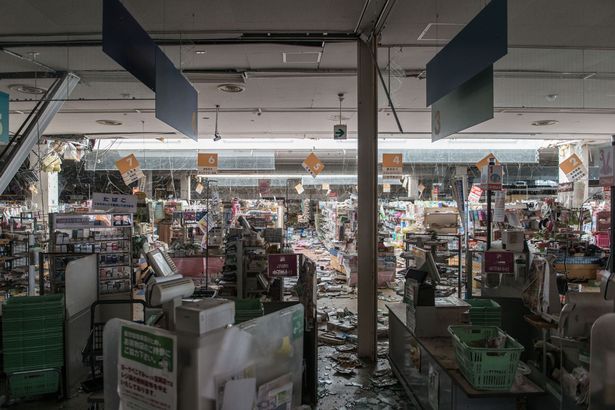
Supermarket sweep: Checkouts and products strewn over the floor are left as they were
"I was convinced that seeing the effects of the disaster with my own eyes would mean I could assess the effects of the power station failure and understand the scale of the tragedy, especially the tragedy of the evacuated residents, in a better way.
"This was a way of drawing my own conclusions without being influenced by any media sensation, government propaganda, or nuclear lobbyists who are trying to play down the effects of the disaster, and pass on the information obtained to as wider a public as possible," he explains.
haiyaaa ciilaaka luuwa weelas waaa
bikin merinding waaa,moga2 gak terjadi lagi waaa
Nature's creep: An aerial photograph of abandoned cars, taken by a drone
Empty streets, overgrown cars and acres and acres of binbags filled with contaminated soil - Fukushima is an area abandoned and heading slowly back to nature.
On March 11, 2011, an earthquake and subsequent giant tsunami devastated the Japanese prefecture on the Pacific coast.
The wall of water reached the tops of tower blocks and rolled as far as six miles inland.
A Chernobyl-style catastrophe was averted but five years on, the impact of the incident on the country has been captured in sensational images.
Read more: First footage from inside Fukushima reactor taken by 3D printed robot
Photographer Arkadiusz Podniesinski was braced for what Fukushima had to show him, having visited Chernobyl in 2008.
The Polish filmmaker also made a documentary when he went to the site which was hit by a nuclear disaster in 1987, The Zone in 4K, which featured footage of the abandoned town of Pripyat, Ukraine.
Measure of the site: A radiation reading of 6,7 uSv/h shows the elevated levels
The natural disaster made 470,000 people homeless but many were evacuated safely, and it was only in the aftermath that the real horror unfolded – one of a nuclear nature.
The back-up generators for the cooling systems at the Fukushima Daiichi nuclear power station were flooded and several reactors went into meltdown.
Bagged up: Dump sites with sacks of contaminated radioactive soil are usually located on arable land
But his images, he says, were not intended to retread the details about the accident that we already knew.
"More than 120 000 people are still not able to return to their homes, and many of them are still living in temporary accommodation specially built for them," he writes on his blog .
Waste storage: To save space the soil bags are stacked in layers, one on top of the other
"The zone with the lowest level of radiation is the green zone, and decontamination work has been completed here. Now the clean-up is in its final stages, and soon the evacuation order is to be lifted."
Despite all of the work which has been done in five years, there are stil many markers of what has occured.
No go: A motorbike left next to a lamppost in 2011, weeds having grown over much of the bike's wheel
Large swathes of black sacks filled with soil mark the landscape, as the authorities are removing the top, most contaminated layer of soil and taking it away to many thousands of dump sites.
"The sacks are everywhere. They are becoming a permanent part of the Fukushima landscape," Arkadiusz explains.
Shop floor: A supermarket with products left on the floor and cobwebs hanging between the shelves
When he visited the red zone, he found some vehicles which surprised him.
"In the vicinity of the red zone I happen to notice an abandoned car. It is hard to make it out from a distance, it is almost completely overgrown with green creepers.
Parking space: The hidden vehicles were abandoned before the disaster and have never moved
"When I get up closer I notice that there are more vehicles, neatly organised in several rows," he says, clarifying that the cars were abandoned before the disaster but were heavily contaminated during it.
Wrapping up the project, Arkadiusz said that his investigations into Fukushima and how it is now will never be over, and he had pledged to revisit in the future.
Supermarket sweep: Checkouts and products strewn over the floor are left as they were
"I was convinced that seeing the effects of the disaster with my own eyes would mean I could assess the effects of the power station failure and understand the scale of the tragedy, especially the tragedy of the evacuated residents, in a better way.
"This was a way of drawing my own conclusions without being influenced by any media sensation, government propaganda, or nuclear lobbyists who are trying to play down the effects of the disaster, and pass on the information obtained to as wider a public as possible," he explains.
haiyaaa ciilaaka luuwa weelas waaa
bikin merinding waaa,moga2 gak terjadi lagi waaa


anasabila dan sebelahblog memberi reputasi
2
1.6K
1

Komentar yang asik ya
Mari bergabung, dapatkan informasi dan teman baru!

Berita Luar Negeri
81.9KThread•19.7KAnggota
Urutkan
Terlama
Komentar yang asik ya