


- Beranda
- Berita Luar Negeri
The truth about China
...


TS
.haiyaa
The truth about China
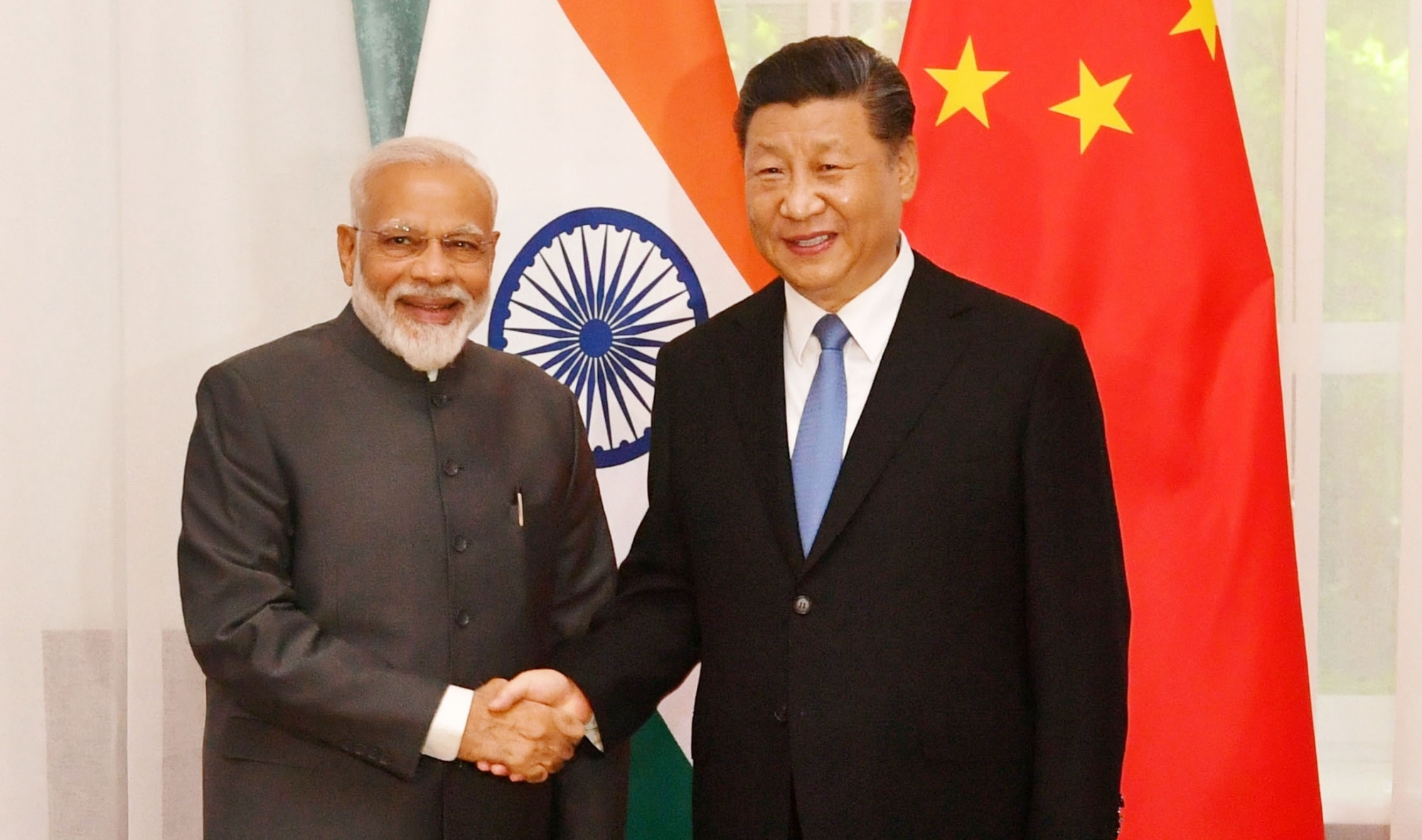
The Prime Minister Narendra Modi is presently visiting Bishkek, Kyrgyzstan to attend a meeting with Chinese President Xi Jin Ping and other leaders on the sidelines of the Shanghai Co-operation Organisation.
The Indian leader has met the Chinese leader often in the past in an effort to improve relations between the two countries,but I submit that certain realities seem to have been overlooked by the Indian side. To understand this one must know that China of today only pretends to be a communist country, but in fact it is capitalist.
It is in the nature of capital to seek avenues for profitable investment, markets to capture, and cheap raw materials to obtain. After its industrialization has developed to a certain level a country turns imperialist, that is, it seeks overseas markets and raw materials. That is why England conquered India and France conquered Algeria and Vietnam.In the 1930s and 1940s Nazi German imperialism was the real danger to the world, and not British or French imperialism.
This was because German imperialism at that time was rising and expanding, and hence aggressive imperialism, while British and French imperialism were on the defensive. While the latter only wanted to hold on to their colonies, the Nazis wanted to conquer and enslave other countries. Hence the Nazis were the real danger to the world.
Similarly, today the danger to the world is not from America or Europe but from China,because the Chinese are on the road of aggressive expansionism in the world. With their massive industry seeking markets for its goods and cheap raw materials, and with their huge 3.2 trillion dollar foreign exchange reserve hungrily seeking avenues for profitable investment, the Chinese are today aggressive imperialists and the greatest danger to the world.
It is true they are not presently expanding militarily like Nazi Germany, but they are aggressively expanding economically by penetrating and undermining the economies of many countries of the world. In the last decade, Chinese overseas investment has skyrocketed. Today the Chinese are almost everywhere, Asia, Africa, Latin America, and of course USA and Europe.
Their Belt and Road Initiative is a network of roads, railways, oil pipelines, power grids, ports and other infrastructure projects connecting China with the world. It aims at improving infrastructure and connectivity between China and the rest of Eurasia in order to dominate it. China’s focus is often on vital infrastructure like ports e.g. Gwadar in Pakistan, Piraeus in Greece, and Hambantota in Sri Lanka, the aim being to get a strategic foothold in these countries.
By selling goods at less than half the price at which the American or European manufacturer can afford to sell (in view of his higher labor cost), the Chinese have destroyed many American and European industries.
Now the Chinese are seeking to capture the markets and raw materials in underdeveloped countries by dumping goods at very low prices so as to make the local product uncompetitive.
Pakistan, for instance, is flooded with cheap Chinese goods. While capturing foreign markets, the Chinese were carefully protecting their own by high tariffs.It has to be said to the credit of President Trump that he has called the Chinese bluff, and bluntly told the Chinese that this won’t do. You can’t have 25 percent tariff on import of automobiles into China when USA imposes a tariff of only 2.5 percent for import of cars into USA.
Trump has imposed tariffs on several Chinese goods and has announced more in the future. To this, the Chinese announced retaliatory tariffs, but that will hurt Americans little.
It is well known that the Chinese have no business ethics, and that is why many American and European companies are reluctant to hire Chinese from mainland China as they often commit espionage of industrial secrets. Since I am an Indian, I would like to refer to China’s economic relations with India.
As is well known, India was a Brtish colony till 1947, and the British policy was broadly to keep India unindustrialised. However, after Independence, a certain degree of industrialization took place in India and we started manufacturing goods which we had to earlier import. Now the Chinese have, to a certain extent, penetrated our market at the expense of our domestic industries. An article entitled ‘ How Chinese companies are beating India in its own backyard ‘ published on 12 December. 2017 in The Economic Times gives some interesting details. Indo-Chinese trade is heavily skewed in favor of the Chinese.
Indian exports to China are of 16 billion dollars, mainly of raw materials. But its imports from China are of 68 billion dollars, mainly of value-added goods like mobile phones, plastics, electrical goods, machinery and its parts.
This is typical of the relation between a colony and an imperialist country. Chinese companies use aggressive pricing, state subsidies, protectionist policies and cheap financing.
In certain sectors, Chinese companies dominate the Indian market e.g. in the telecom sector, 51 percent of which has been captured by the Chinese. Indian homes are full of Chinese goods e.g. fittings, lampshades, tube lights, etc. now the Chinese want to go further. Their companies like Huawei, ZTE, Lenovo, Xiaomi, CSITEC, CMIEC, Haier, TCL, Jiangsu Overseas Group Companies and FiberHome Technologies are aided by the Chinese government and aggressive diplomacy to spread all over the globe.
These companies are in high tech, intercom, computers, metallurgy, steel, etc and have deeply penetrated India. Those who think that the Chinese danger can be averted by sweet words and cajoling fail to understand the nature of Chinese imperialism, based on certain iron objective economic laws which operate irrespective of one’s subjective personal wishes.
To keep thinking that one can improve relations between India and China is just wishful thinking. It is like imagining that a fox and a chicken can coexist in the same pen.
To ignore this danger will be behaving like an ostrich, like Neville Chamberlain who kept thinking that Hitler was no danger until it was almost too late.
The Chinese of today are like ravenous wolves, and only if the countries of the world realize the danger and put up a stout united opposition to them that they can be stopped from swallowing up other nations.
haiyaaa ciilaaka luuwa weelas waaa
Apakah Land of SICK and RETARD bakalan dikemplang rame2 waaa!!??

Quote:
Original Posted By .haiyaa►Treat China like a frenemy: Raghav Bahl to New Delhi in his new book of prescriptions for India
‘Embrace when possible, ignore when prudent and fight back only when absolutely necessary.’

Establishing an alliance with the US does not mean we have to turn our backs on China. On the contrary, the aim of multi-alignment is to explore areas of common interest with a variety of partners, rather than commit to just one (or none). In any case, we couldn’t disengage from China even if we wanted to; we share a 2500-mile-long border and a vital economic connection. China is India’s largest trading partner, with bilateral trade skyrocketing from $2.9 billion in 2000 to more than $84 billion in 2017, though the trade deficit has also ballooned.
By lavishing aid on countries from Central Asia to South America, Beijing has bought loyalty and acquiescence all over the world, minimizing blowback when it decides, say, to hoard rare-earth metals or build artificial islands in the South China Sea. China has also grown increasingly skilled at wielding what the Economist calls “sharp power”: the use of manipulation and coercion to influence other countries, in contrast to the blunt force of its “hard” military and economic power or the “soft” impact of culture and values.
There is growing evidence of covert Chinese meddling in politics and academia all over the globe:influencing politicians in Australia, infiltrating government offices in Canada, using fake LinkedIn accounts to cultivate sources in Germany, and pressuring academic publishers to remove sensitive or unflattering books from their databases, the Washington Post reported. And the Communist Party has demonstrated alarming hubris in amending the country’s Constitution to abolish term limits, giving President Xi Jinping unlimited power – possibly for life[/b]
Give our proximity and our kinship as Asia’s developing giants, China poses a unique challenge for India. It is both helpmate and bully, collaborator and rival, lifeline and threat. We simultaneously appreciate, envy and fear our big neighbour to the north, which sustains us even as it unnerves us with taunts across the border and aggression in the region’s seas.
In 2017, for instance, China both picked a fight with us on the Doklam plateau and took advantage of the region’s fixation on nuclear North Korea to build new military facilities on its man-made islands in the South China Sea. While we don’t want to antagonise China, we won’t be its doormat, either. That means we must remain ever nimble, treating China alternately as a peer, a partner and an adversary, depending on the circumstances.
As Asia’s two great ancient civilisations, China and India have co-existed side by side for centuries. India became one of the first countries to recognise China’s communist leadership after the 1949 revolution. Despite occasional flare-ups along the disputed border, the relationship has been largely peaceful. The one major exception, of course, is the 1962 war, a humiliation that lingers painfully in India’s collective memory and perhaps unfairly heightens our fears of China to this day.
Since then, military actions along the border have been minor and relatively short-lived; as much as the Chinese may relish testing and provoking us, as on the Doklam plateau, they appear increasingly wary of pushing it too far. “China sees India as the biggest rising developing power that in the longer run...could pose challenges,” Bonnie Glaser, of the US Center for Strategic and International Studies (CSIS), told the Times of India. “In the near term, China worries most about India’s cooperation with other countries, forging coalitions with Japan, Australia, and the US, to counter Chinese power influence in the region.”
Until relatively recently, China and India followed similar developmental paths. In 1985, our GDPs, measured at PPP, were almost identical. But then China took off, liberalising earlier, faster and more zealously than India, where the promise of the early 1990s became mired in bureaucratic paralysis. As China soared to dizzying heights, India plodded along, making slow, incremental progress. The world came to see us – and we came to see ourselves – as a serial underachiever: talented but floundering, unable to fully harness our natural gifts and become anything other than a poorer, less successful, more democratic version of China.
In 2015, GDP growth in China missed the 7 per cent mark for the first time since 2009, while India’s topped 8 per cent. In 2017, both fell to about 6.7 per cent, though in the October–December quarter India outpaced China, 7.2 per cent to 6.8 per cent. The IMF predicts that the general trend will hold, with India’s growth reaching nearly 8.2 per cent in 2022 and China’s falling below 5.8 per cent.
GDP growth figures, of course, must be consumed with a heaping spoonful of salt; measuring – let alone predicting – economic growth is a notoriously elusive pursuit, with different sources using assorted variables and methodologies. This is especially true for rapidly developing China and India, where economists from across the spectrum have persistently questioned the reliability of their government-supplied growth figures.
Indeed, many attribute India’s upward trend to the government’s new way of measuring economic output, introduced in 2015 to keep the country more in line with international standards. Delhi may have shown “incompetence” in implementing this new system, Ruchir Sharma told Bloomberg, but Beijing is guilty of flagrantly “managing the numbers”.
Even Chinese premier Li Keqiang has scoffed at the notion of self-reported growth; he once told a US ambassador that China’s GDP numbers were “man-made” and “for reference only”. The only measures that counted, he said, were electricity use, rail-cargo volume and loans issued. He’s right; these days, GDP growth alone is hardly the be-all, end-all measure of a country’s progress.
What matters more in the long term is the quality of that growth. And on that score, India may well have the stronger hand. Our growth has been gradual and organic, grounded in domestic consumption, while China achieved rapid expansion largely by boosting exports and taking out massive loans to remake its infrastructure. They can’t keep that up indefinitely; Bloomberg estimates that by 2022, China’s total debt will be 327 per cent of GDP, making it one of the world’s most indebted countries. By some estimates, China has as much as $7 trillion in hidden bad debts, dwarfing the official estimate of $250 billion and greatly increasing the risk of a financial crisis.
In fact, China has adopted some of the free-market strategies long favoured by well-established democracies – including India – to produce steadier, more methodical growth: reducing barriers for foreign investors, encouraging entrepreneurship and developing its own home-grown tech industry, among others.
At the 19th Communist Party Congress in 2017, which cemented Xi Jinping’s political control for the foreseeable future, the government for the first time demonstrated rising concern about the long-term impact of the national credit boom. When Xi presented the economic plan for the next five years, he pointedly declined to name a specific GDP growth target, indicating a desire to rein in debt and let the rate adjust to its natural level.
Some estimates put that figure at less than 3 per cent if Beijing were to take into account all its debt. Xi also reiterated the importance of reducing economic dependence on manufacturing and boosting domestic spending; between 2010 and 2015, household expenditures as a percentage of GDP barely budged, from 36 to 37 per cent. By contrast, household expenditures in India hit 59 per cent of GDP in 2015 and in the US, 68 per cent.
Yet Xi has tightened state control even as he vows to promote market reforms. The muddled message has caused the government to overreact to the natural hiccups that mature market economies take in stride; when the stock market dropped precipitously, for instance, Beijing suspended initial public offerings (IPOs), slashed interest rates, instituted new trade restrictions and even shut it down temporarily. Such measures remind foreign investors of how inexperienced the Chinese are at navigating free markets and how quickly the state can seize control.
Rising production costs, rampant corporate espionage and greater government interference have further frustrated foreign companies operating in China. Among those that have shuttered or decreased their offices on the mainland are Microsoft, Adobe, Panasonic, Yahoo and Adidas.
What does this mean for India? Certainly it creates new opportunities, elevating our role as an economic and strategic leader in the region to help combat the uncertainty wrought by China’s slowing economy. At the same time, it heightens the importance of crafting a careful, nuanced and forward-looking China policy.
haiyaaa ciilaaka luuwa weelas waaa
Bkln tambah seru waaa!!??
China Uncensored,Pandangan ane thd Ah Tiong SICKmen of Asia diurai oleh Ah Neh waaa.
Singkat nyeee,SICKmen of Asia toowlool RAJA Nipu cannot be trusted waaa!!!!
‘Embrace when possible, ignore when prudent and fight back only when absolutely necessary.’
Establishing an alliance with the US does not mean we have to turn our backs on China. On the contrary, the aim of multi-alignment is to explore areas of common interest with a variety of partners, rather than commit to just one (or none). In any case, we couldn’t disengage from China even if we wanted to; we share a 2500-mile-long border and a vital economic connection. China is India’s largest trading partner, with bilateral trade skyrocketing from $2.9 billion in 2000 to more than $84 billion in 2017, though the trade deficit has also ballooned.
Yet China can never truly be trusted. As the world’s largest trading partner, it may be a key pillar of the global economy, but it is also inscrutable and aggressive in its quest for hegemony, playing by its own set of rules in everything from trade practices to territorial disputes.
By lavishing aid on countries from Central Asia to South America, Beijing has bought loyalty and acquiescence all over the world, minimizing blowback when it decides, say, to hoard rare-earth metals or build artificial islands in the South China Sea. China has also grown increasingly skilled at wielding what the Economist calls “sharp power”: the use of manipulation and coercion to influence other countries, in contrast to the blunt force of its “hard” military and economic power or the “soft” impact of culture and values.
There is growing evidence of covert Chinese meddling in politics and academia all over the globe:influencing politicians in Australia, infiltrating government offices in Canada, using fake LinkedIn accounts to cultivate sources in Germany, and pressuring academic publishers to remove sensitive or unflattering books from their databases, the Washington Post reported. And the Communist Party has demonstrated alarming hubris in amending the country’s Constitution to abolish term limits, giving President Xi Jinping unlimited power – possibly for life[/b]
Give our proximity and our kinship as Asia’s developing giants, China poses a unique challenge for India. It is both helpmate and bully, collaborator and rival, lifeline and threat. We simultaneously appreciate, envy and fear our big neighbour to the north, which sustains us even as it unnerves us with taunts across the border and aggression in the region’s seas.
In 2017, for instance, China both picked a fight with us on the Doklam plateau and took advantage of the region’s fixation on nuclear North Korea to build new military facilities on its man-made islands in the South China Sea. While we don’t want to antagonise China, we won’t be its doormat, either. That means we must remain ever nimble, treating China alternately as a peer, a partner and an adversary, depending on the circumstances.
Where our interests converge, we should embrace; where they diverge, we must pick our battles carefully, adopting a hard line only when Beijing’s actions pose a direct threat. Otherwise, we keep a low profile and grant the Chinese plenty of leeway, with the understanding that they are no more interested than we are in escalating hostilities. Beijing knows well that if tensions rise too high, we have Team Democracy behind us.
As Asia’s two great ancient civilisations, China and India have co-existed side by side for centuries. India became one of the first countries to recognise China’s communist leadership after the 1949 revolution. Despite occasional flare-ups along the disputed border, the relationship has been largely peaceful. The one major exception, of course, is the 1962 war, a humiliation that lingers painfully in India’s collective memory and perhaps unfairly heightens our fears of China to this day.
Since then, military actions along the border have been minor and relatively short-lived; as much as the Chinese may relish testing and provoking us, as on the Doklam plateau, they appear increasingly wary of pushing it too far. “China sees India as the biggest rising developing power that in the longer run...could pose challenges,” Bonnie Glaser, of the US Center for Strategic and International Studies (CSIS), told the Times of India. “In the near term, China worries most about India’s cooperation with other countries, forging coalitions with Japan, Australia, and the US, to counter Chinese power influence in the region.”
Until relatively recently, China and India followed similar developmental paths. In 1985, our GDPs, measured at PPP, were almost identical. But then China took off, liberalising earlier, faster and more zealously than India, where the promise of the early 1990s became mired in bureaucratic paralysis. As China soared to dizzying heights, India plodded along, making slow, incremental progress. The world came to see us – and we came to see ourselves – as a serial underachiever: talented but floundering, unable to fully harness our natural gifts and become anything other than a poorer, less successful, more democratic version of China.
That has changed in recent years. Though China remains Asia’s reigning powerhouse, with an economy that dwarfs India’s overall, India is catching up. Broadly speaking, our growth trajectories are moving in opposite directions, with China’s slowing while India’s gains steam.
In 2015, GDP growth in China missed the 7 per cent mark for the first time since 2009, while India’s topped 8 per cent. In 2017, both fell to about 6.7 per cent, though in the October–December quarter India outpaced China, 7.2 per cent to 6.8 per cent. The IMF predicts that the general trend will hold, with India’s growth reaching nearly 8.2 per cent in 2022 and China’s falling below 5.8 per cent.
GDP growth figures, of course, must be consumed with a heaping spoonful of salt; measuring – let alone predicting – economic growth is a notoriously elusive pursuit, with different sources using assorted variables and methodologies. This is especially true for rapidly developing China and India, where economists from across the spectrum have persistently questioned the reliability of their government-supplied growth figures.
Indeed, many attribute India’s upward trend to the government’s new way of measuring economic output, introduced in 2015 to keep the country more in line with international standards. Delhi may have shown “incompetence” in implementing this new system, Ruchir Sharma told Bloomberg, but Beijing is guilty of flagrantly “managing the numbers”.
Even Chinese premier Li Keqiang has scoffed at the notion of self-reported growth; he once told a US ambassador that China’s GDP numbers were “man-made” and “for reference only”. The only measures that counted, he said, were electricity use, rail-cargo volume and loans issued. He’s right; these days, GDP growth alone is hardly the be-all, end-all measure of a country’s progress.
What matters more in the long term is the quality of that growth. And on that score, India may well have the stronger hand. Our growth has been gradual and organic, grounded in domestic consumption, while China achieved rapid expansion largely by boosting exports and taking out massive loans to remake its infrastructure. They can’t keep that up indefinitely; Bloomberg estimates that by 2022, China’s total debt will be 327 per cent of GDP, making it one of the world’s most indebted countries. By some estimates, China has as much as $7 trillion in hidden bad debts, dwarfing the official estimate of $250 billion and greatly increasing the risk of a financial crisis.
Of course, economists have been warning for years of the imminent collapse of the “Chinese miracle”, yet the juggernaut rolls on – at a slower pace, to be sure, but that’s to be expected, even welcomed, in such a runaway economy.
In fact, China has adopted some of the free-market strategies long favoured by well-established democracies – including India – to produce steadier, more methodical growth: reducing barriers for foreign investors, encouraging entrepreneurship and developing its own home-grown tech industry, among others.
At the 19th Communist Party Congress in 2017, which cemented Xi Jinping’s political control for the foreseeable future, the government for the first time demonstrated rising concern about the long-term impact of the national credit boom. When Xi presented the economic plan for the next five years, he pointedly declined to name a specific GDP growth target, indicating a desire to rein in debt and let the rate adjust to its natural level.
Some estimates put that figure at less than 3 per cent if Beijing were to take into account all its debt. Xi also reiterated the importance of reducing economic dependence on manufacturing and boosting domestic spending; between 2010 and 2015, household expenditures as a percentage of GDP barely budged, from 36 to 37 per cent. By contrast, household expenditures in India hit 59 per cent of GDP in 2015 and in the US, 68 per cent.
Yet Xi has tightened state control even as he vows to promote market reforms. The muddled message has caused the government to overreact to the natural hiccups that mature market economies take in stride; when the stock market dropped precipitously, for instance, Beijing suspended initial public offerings (IPOs), slashed interest rates, instituted new trade restrictions and even shut it down temporarily. Such measures remind foreign investors of how inexperienced the Chinese are at navigating free markets and how quickly the state can seize control.
Rising production costs, rampant corporate espionage and greater government interference have further frustrated foreign companies operating in China. Among those that have shuttered or decreased their offices on the mainland are Microsoft, Adobe, Panasonic, Yahoo and Adidas.
What does this mean for India? Certainly it creates new opportunities, elevating our role as an economic and strategic leader in the region to help combat the uncertainty wrought by China’s slowing economy. At the same time, it heightens the importance of crafting a careful, nuanced and forward-looking China policy.
haiyaaa ciilaaka luuwa weelas waaa
Bkln tambah seru waaa!!??
China Uncensored,Pandangan ane thd Ah Tiong SICKmen of Asia diurai oleh Ah Neh waaa.
Singkat nyeee,SICKmen of Asia toowlool RAJA Nipu cannot be trusted waaa!!!!
Diubah oleh .haiyaa 19-07-2019 10:03



anasabila dan 3 lainnya memberi reputasi
4
1.4K
12

Komentar yang asik ya
Mari bergabung, dapatkan informasi dan teman baru!

Berita Luar Negeri
82KThread•20.2KAnggota
Tampilkan semua post
TS
.haiyaa
#6
Quote:

haiyaaa ciilaaka luuwa weelas waaa
Gara2 SICKmen of Asia kitee Huaqiao bakalan ketiban pulung waaa!!!!
Mereka maju krn tingkah laku mrk yg Memuakan kitee kena,mrk ambrol kitee juga kena waaa!!!!


Tapi bagusan mrk ambrol dr dlm,krn duniyee lbh aman dan mungkin tdk adee WW3 waaa!!??


Idle and abandoned: the hidden truth of China’s economic ambitions
Block after block of empty buildings in city that was poster child for China’s economic miracle show what happens when ambitious local plans meet economic reality. But can China wean itself off ambitious growth targets?
Block after block of empty buildings in city that was poster child for China’s economic miracle show what happens when ambitious local plans meet economic reality. But can China wean itself off ambitious growth targets?
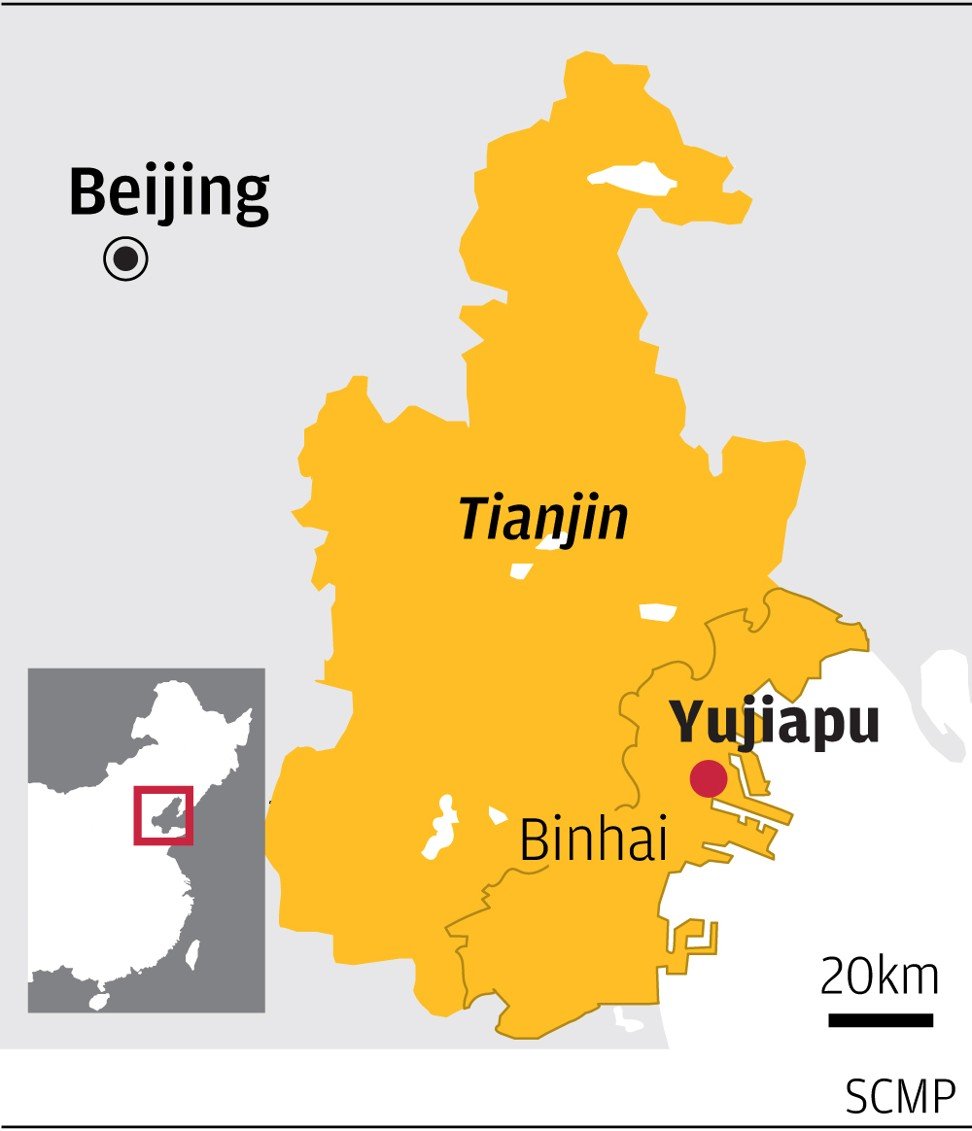
Business is slow in Tianjin’s Binhai New Area, says taxi driver Yang Xiang, with visitors claiming tax perks the most reliable sources of fares.
The southern part of the free-trade zone, including an area once touted as China’s “new Manhattan”, is block after block of mostly empty commercial buildings. Roads in the northern part, which is crowded with high-rise flats, are congested during rush hours but empty at other times.
It’s an object lesson in the perils of distorted development priorities – and the kind of thing President Xi Jinping is seeking to avoid in his quest for a more balanced Chinese economic growth model.
Yang, 28, said cabbies around Binhai’s Yujiapu financial district found it best to focus on the local railway station, where streams of people from neighbouring cities such as Beijing arrived every day before heading to local tax bureaus. They did not stay for long.
“An hour or two later, they have their tax affairs settled and begin their journey back to the railway station,” he said.
More than 20,000 companies are registered in Binhai, where preferential tax arrangements can halve a company’s tax bill. But even though there are also other incentives on offer, such as subsidies reducing rents by a third, much of their economic activity takes place elsewhere.
Binhai, encompassing 2,000 sq km of land around Tianjin’s port, was designated a “pilot area of comprehensive financial reform and innovation” in 2009. It once claimed its gross domestic product (GDP) had quintupled to 1 trillion yuan (US$145 billion) in the decade through 2016 and that it was China’s richest district, supplanting Pudong in Shanghai.
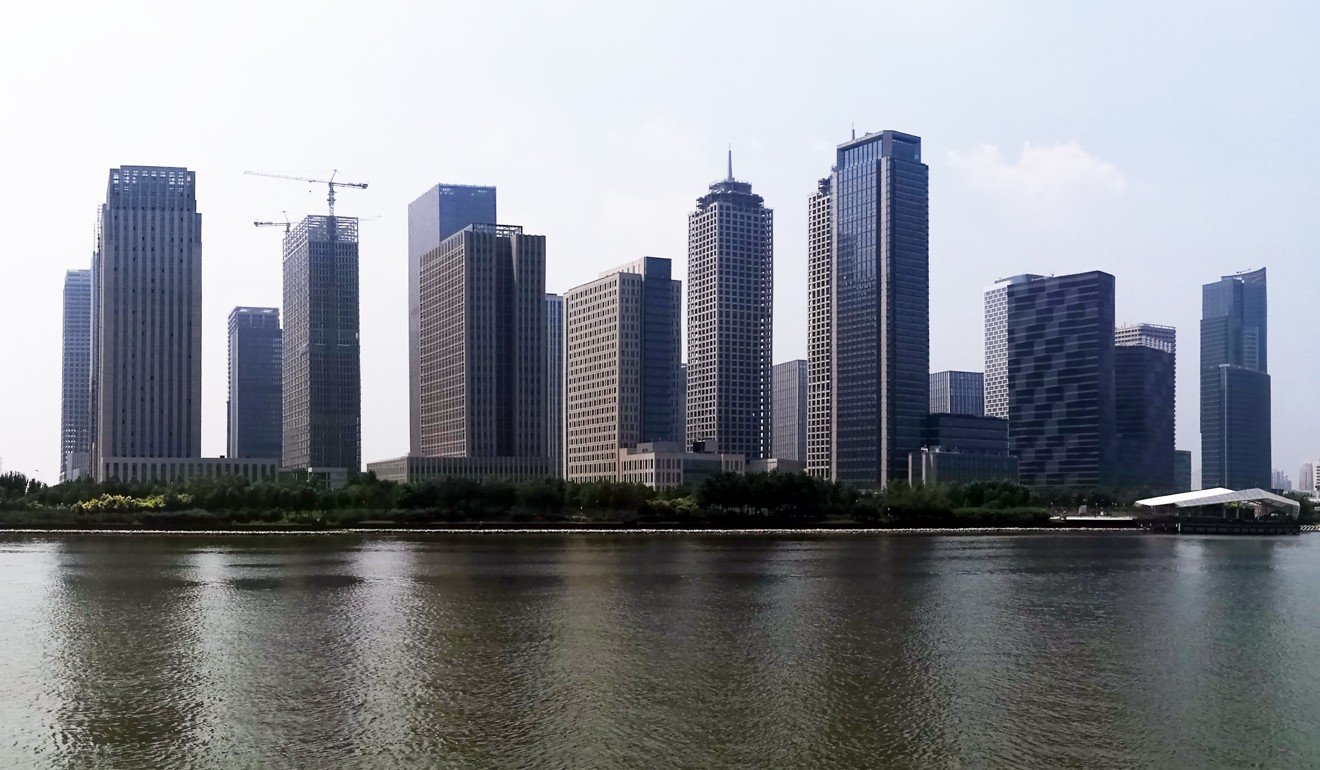
The Yujiapu skyline seen from across the Hai River. Photo: Simon Song
But the mirage did not last, with the Binhai authorities slashing its 2016 GDP by a third last month, to 666.4 billion yuan, after eliminating the double counting of business conducted elsewhere.
And Binhai was not alone in inflating its economic data. Inner Mongolia’s government said in November that about 40 per cent of the region’s reported industrial output in 2016, as well as 26 per cent of reported fiscal revenues, was fictitious.
China’s rust-belt province of Liaoning, meanwhile, admitted last year that local GDP numbers from 2011 to 2014 had been exaggerated by about 20 per cent.
But it was the confession in Binhai, a poster child of China’s investment-driven economic miracle, that raised the most eyebrows and generated the most debate about whether local governments would heed Xi’s call to pursue high-quality growth following decades chasing rapid expansion.
How the central government is progressing in weaning itself off growth targets will become more apparent next month when Premier Li Keqiang delivers his work report at the annual meeting of the National People’s Congress (NPC), China’s legislature.
Louis Kuijs, head of Asia economics at Oxford Economics, said the incentives had changed for provincial-level governments.
“There is more scrutiny by Beijing on ‘improper’ behaviour by local governments, including in areas such as local financing, corruption and ‘fake data’,” he said.
“Amid the move ‘away from quantity towards quality and equality’, economic targets such as on GDP, investment and fiscal revenues are becoming less important. Overall, this seems to spur local governments into coming clean in terms of the performance on growth and revenues.”
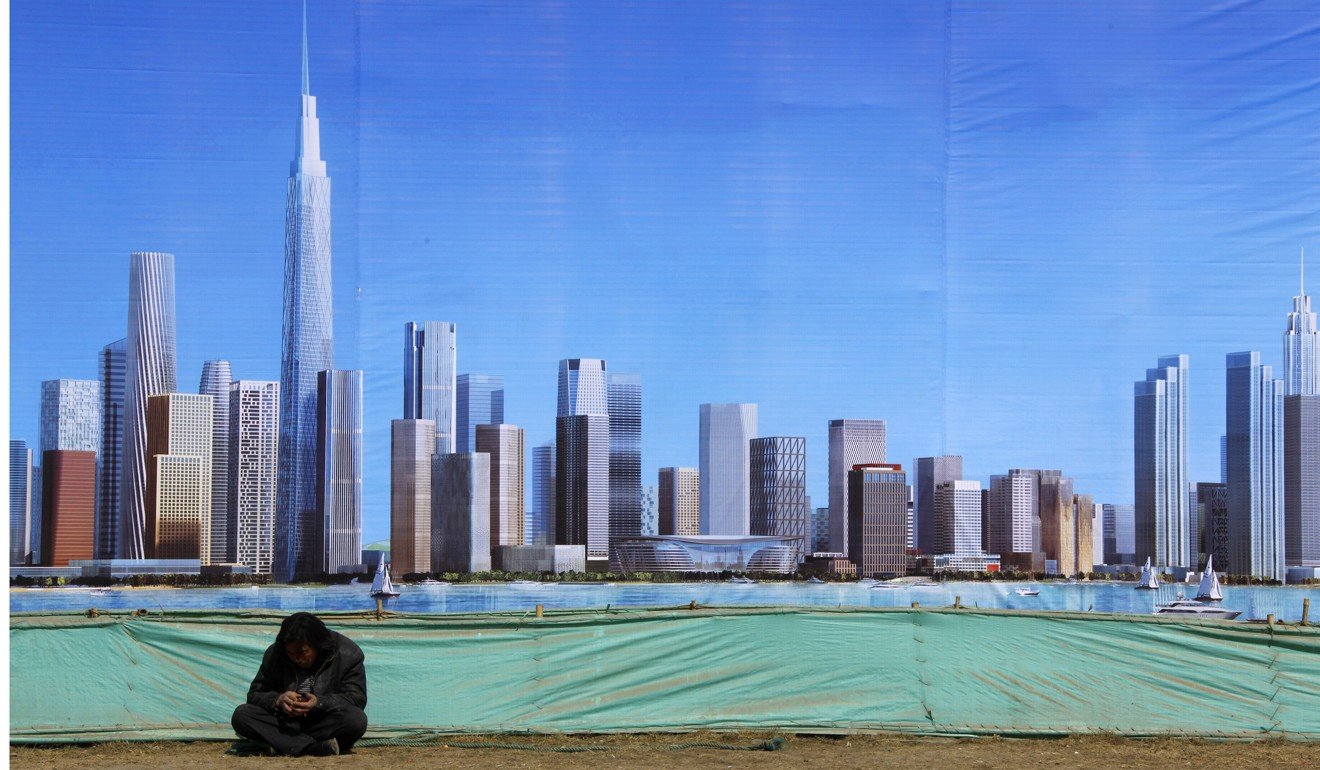
A worker rests in front of a hoarding displaying an artist's impression of the Yujiapu financial district in 2011.
After consolidating his power at the ruling Communist Party’s national congress in October, Xi rolled out a plan for China’s high-quality development through 2050.
GDP growth is widely expected to be given less emphasis in officials’ appraisals, with more weight given to environment protection, poverty alleviation and other livelihood indicators.
While Li would announce a GDP growth target for this year at the NPC meeting, government sources said the general trend was for a de-emphasising of GDP growth targets in coming years. This year’s growth target – with many economists predicting around 6.5 per cent – would be used to ensure employment opportunities, sources said, but in the longer term there would be more emphasis on efficiency, fairness and the environment.
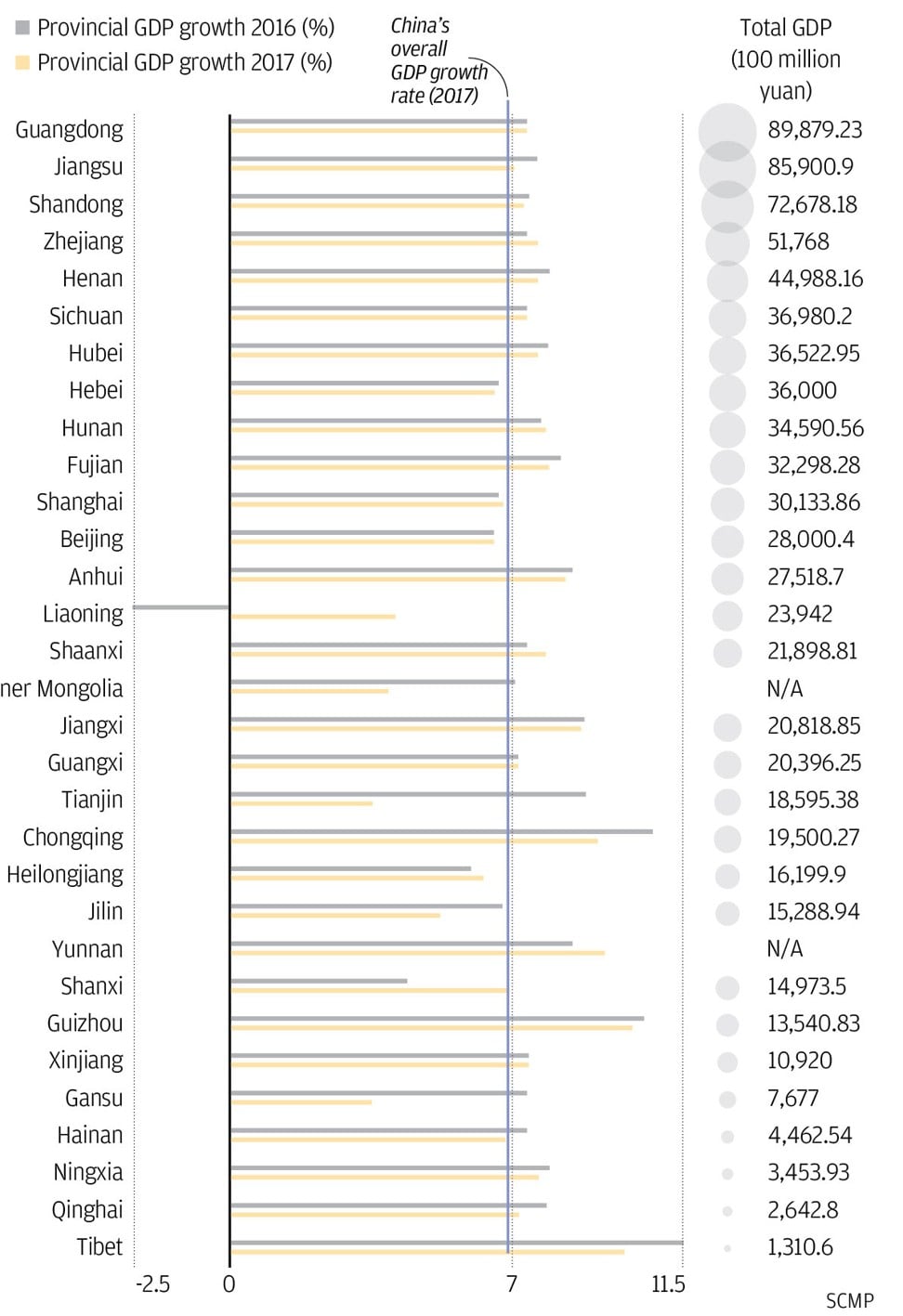
China's provincial GDP growth
Tianjin’s government did not adjust the municipal GDP figure for 2016 after Binhai’s dramatic revision, saying its statisticians had never included the problematic part of Binhai’s economy in their calculations. The authorities had earlier said that Binhai accounted for more than half of Tianjin’s GDP.
However, after a revamp of its statistical practices, the Tianjin government reported GDP growth of just 3.6 per cent for last year, down from 9 per cent in 2016 and 17.4 per cent in 2010, during a run of double-digit annual growth stretching back to 1999.
==>SICKmen of Asia RAJA Nipu waaa!!!!Echoing the new “slower is better” mantra, Tianjin party secretary Li Hongzhong told local officials at a meeting in January: “We must get rid of the speed complex. We must break away from the outdated development concept … and be determined to push ahead with high quality development.”==>Barang nyeee Ringkih,negara nyeee RAJA Tipu Menipu waaa!!!!
Binhai started developing the Yujiapu financial district more than a decade ago, with the authorities pledging more than 200 billion yuan in investment, but in recent years it has made international headlines as a spectacular ghost town.
Envisioned as Tianjin’s answer to Manhattan, it rose from a riverside wetland. But on a recent weekday morning, only a handful of people, in thick down jackets, could be seen on its streets.Some finished buildings are partly occupied but others remain under construction or look abandoned.
Liu Jinming, a retired primary school teacher, was walking along the river bank with his grandson. Pointing to the Yujiapu skyline, he said: “Lights can only be seen from a very small number of windows at night. It’s scary.
Why Chinese officials are suddenly coming clean over cooking the books
“I haven’t seen any improvement over the past few years. Some government departments have been relocated here. But that’s all.
“Businessmen are not interested in moving move here. It was the wrong decision to set up a financial district here.”
Tianjin, a northern industrial base, missed one chance to develop into a major financial centre in 2007, when a pilot scheme to allow mainland Chinese residents to directly invest in Hong Kong stocks via Binhai was aborted due to concerns about capital flight.
A high-speed rail link to Beijing has been built since then, but it failed to boost business prospects.
In search of a new niche, Binhai was declared a free-trade zone in 2015, offering consumers everything from Italian Maserati cars and Japanese napkins at slightly reduced prices.
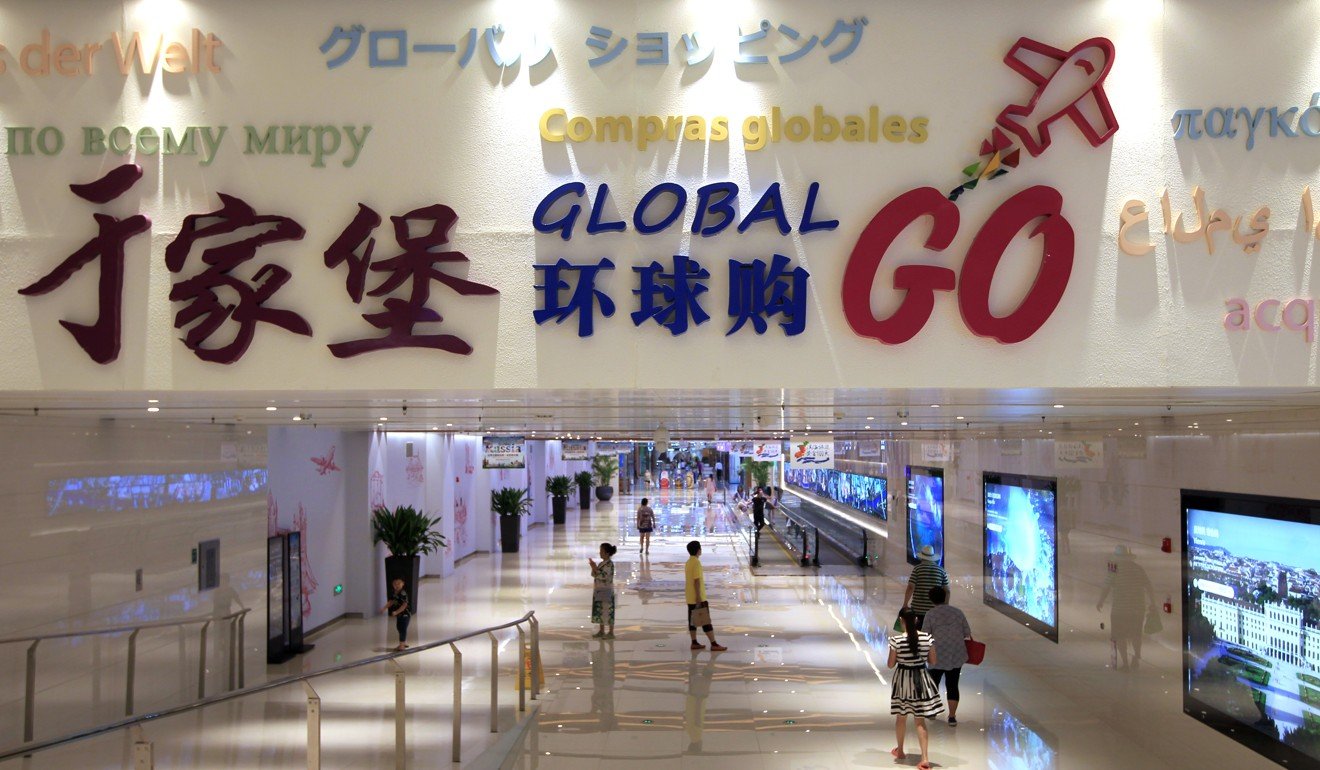
The Global Go shopping centre in Yujiapu. Photo: Simon Song
But at the Global Go shopping centre in Yujiapu, customers are rare, even at lunchtime. A vintage car exhibition in the mall was hoping to charge visitors 58 yuan for a closer look at cars ranging from a 1940 Willys Jeep to a 1970 Ferrari coupe, but due to the lack of demand staff now allow admission free of charge.==>Lagi2 SICKmen of Asia gunakan brg Bule Barat waaa!!!!
One staff member said the exhibition had been put on by the local government.
“But we don’t call it a government-organised event,” he said. “Nowadays, we do things under the name of a company. You know, corporate activities are most needed here.”
Binhai’s 38 sq km central business district, which covers Yujiapu on one side of the Hai River and Conch Bay on the other, was the most aggressive part of the new area in pursuing headline growth. Binhai, in turn, was promoted as the driver of development in Tianjin, a municipality of 15.6 million people which dreamed of becoming China’s “third growth engine”, following Shenzhen in the 1980s and Pudong in Shanghai in the 1990s.
Xiongan is not Shenzhen or Pudong: why latest new area may falter despite push from Beijing
In pursuit of that dream it followed a common path of regional economic development in China: designating a development zone, pouring government funding and bank loans into it, and then, after negotiations with the central government, offering tax breaks, cheap land and subsidies to woo investors.
Macquarie Capital economist Larry Hu said local governments still favoured high GDP figures.
“However, they cannot overdo it, otherwise fiscal transfers and other support from the central government might decline,” Hu said. “An adjustment of past figures could highlight the predicaments of local coffers and facilitate central government support.”
Tianjin’s government is the mainland’s most heavily indebted city government, with the debts of its local state-owned enterprises (SOEs) amounting to 700 per cent of local fiscal income in September, according to a report by the credit rating agency Moody’s last year.
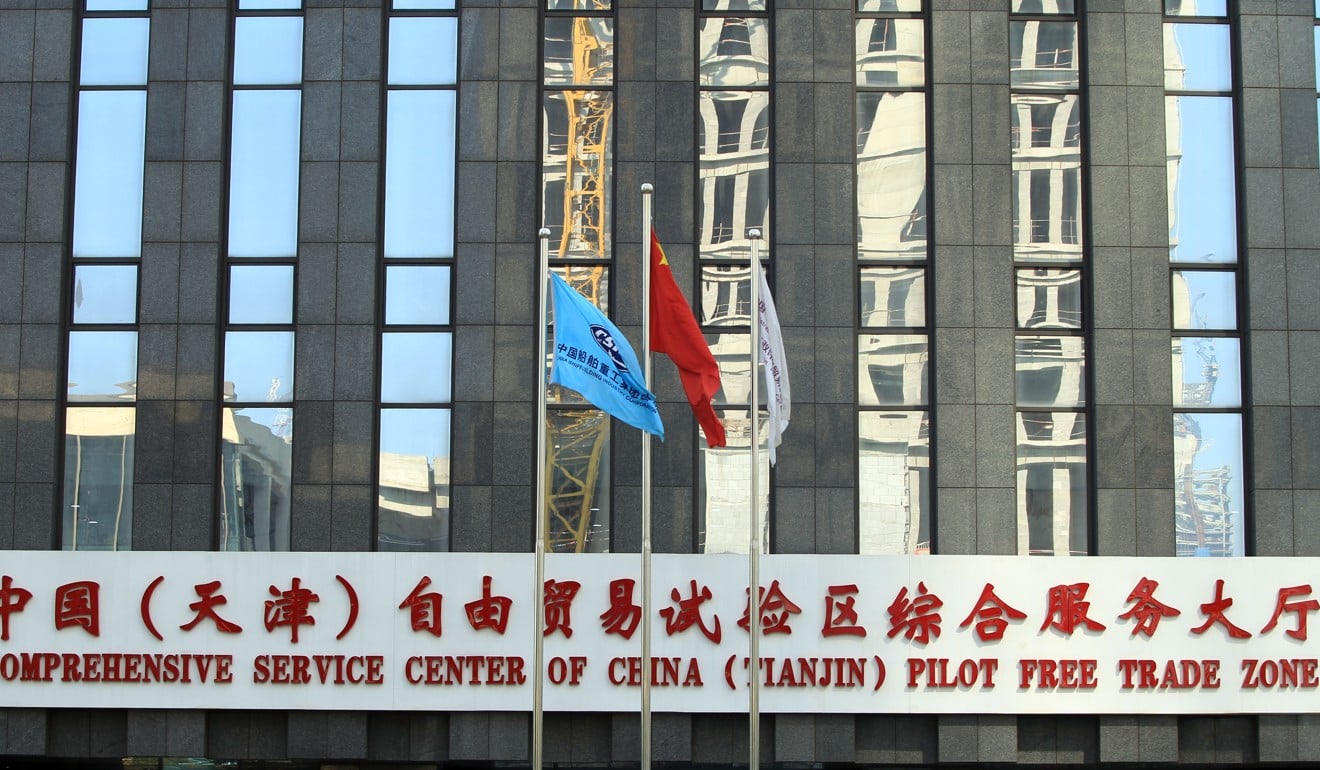
The China (Tianjin) Pilot Free Trade Zone service centre in Yujiapu. Photo: Simon Song
Other provincial-level areas that were heavily indebted included Chongqing, Shanxi and Yunnan, where the ratio stood at between 400 and 600 per cent.
Moody’s has cautioned that the outlook for Chinese local governments is negative this year, with the indebtedness of their SOEs expected to remain high.
Shen Jianguang, an economist with Mizuho Securities, said high leverage – linked to the massive investment projects that were local governments’ main approach to economic growth in past decades – was the biggest risk to the Chinese economy.
“It is possible that local officials want to create a lower comparable base, so they adjusted past GDP figures lower to make future growth look better,” he said. “That said, we cannot rule out that some local governments really want to embrace high-quality growth.”
What happens to a Chinese backwater when it becomes the centre of Xi Jinping’s futuristic dream city?
Ricard Torne, head of economic research at FocusEconomics in Spain, said data for last year was showing the Chinese economy was transitioning from an economic model based on investment and manufacturing towards one dependent on consumption and services, with nominal fixed-asset investment falling to multiyear lows and nominal retail sales remaining robust.
However, even though the National Bureau of Statistics would launch its own survey and investigation on local economies from next year, it was too early to say that local data manipulation would end.
“It would be an arduous task [to stop data manipulation], especially at the regional level, which has been the best way to be promoted within state and party structures,” he said.==>Nipu Menipu adalah BUDAYA Leluhur waaa!!!!
Diubah oleh .haiyaa 16-07-2019 13:25

kitten.meow memberi reputasi
1
Tutup