




TS
boleroes11
Modern Counterinsurgency (COIN) Aircraft.
Modern counterinsurgency aircraft. Part 1 of the
Yesterday, 08:41 Print

During the Vietnam War, the U.S. military leadership came to the conclusion that was created for the "great war" with the Soviet Union supersonic jet fighter aircraft are ineffective against guerrillas operating in the jungle. Part of the problem is solved by remaining in the line of piston stormtroopers A-1 "Skayreyder" and B-26 bombers "Invader" and converted to percussion of training vehicles and helicopters.
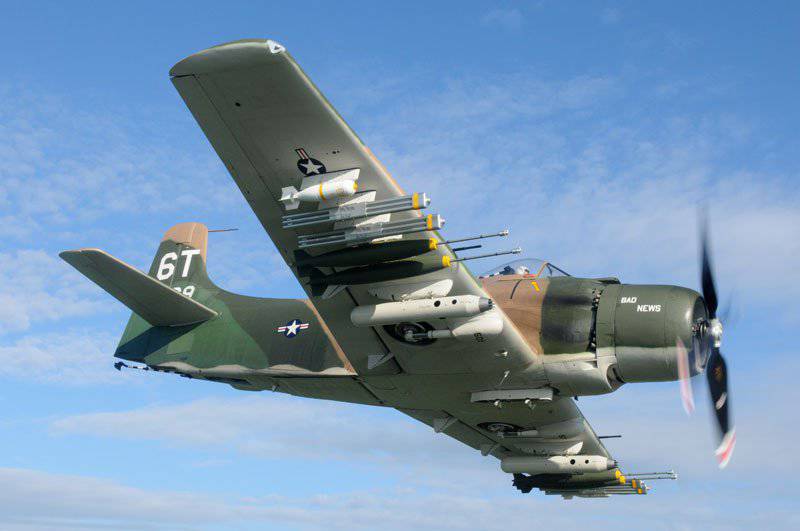
Assault A-1 "Skayreyder"
However, the loss of life and the development of combat aircraft have created during World War II made them inevitable "departure from the scene" only a matter of time, and the military trainer aircraft and attack helicopters were very vulnerable to anti-aircraft fire VC.
Taking into account all these factors, the U.S. launched several programs to create light "counterinsurgency" stormtroopers adapted for operations in conditions of Southeast Asia. The work was the creation and adoption of highly successful turboprop OV-10 "Bronco" and the A-37 turbojet "Dragonfly."
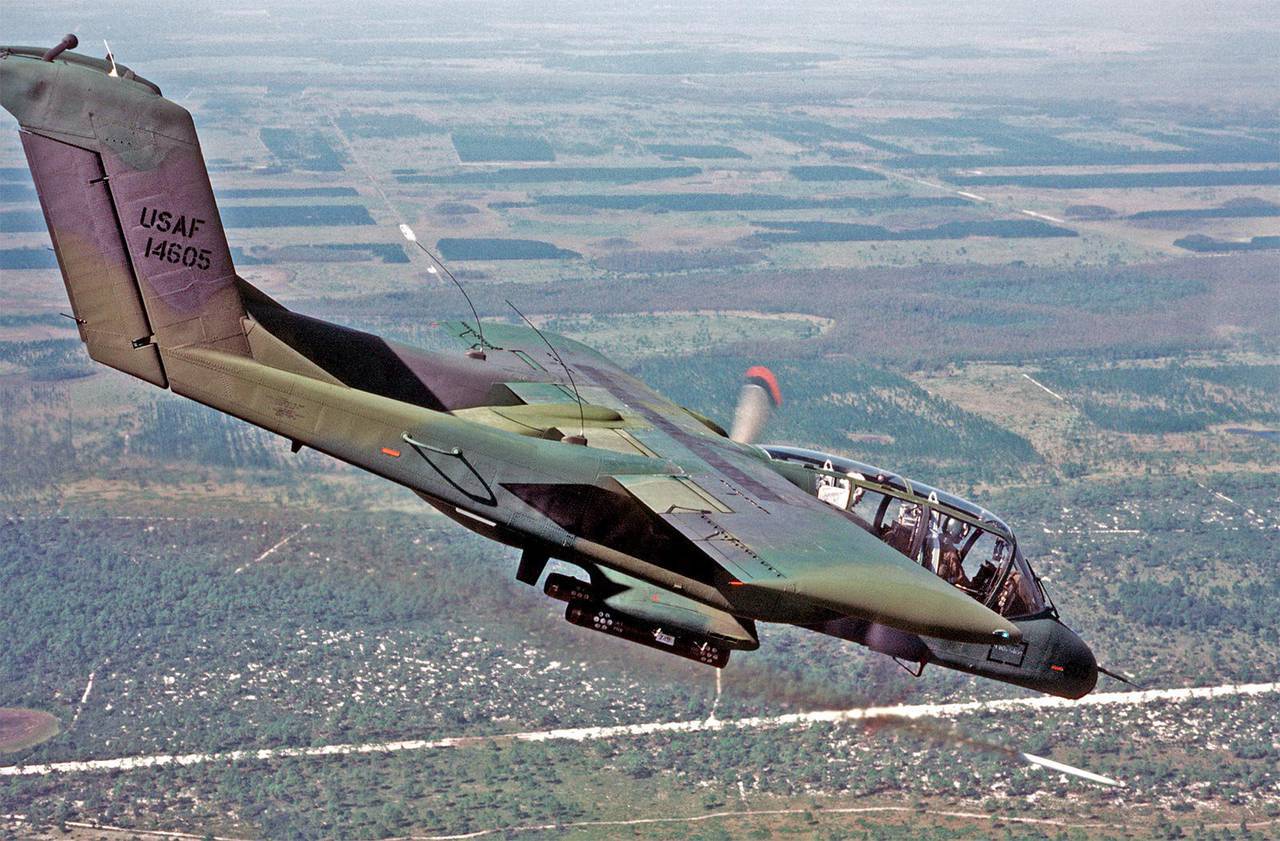
OV-10 "Bronco"
Taken into service shortly before the end of the Vietnam War, these aircraft for many years to become a kind of "standard" light attack vehicles intended for use against irregular forces. They are optimally combines the good security, high agility, wide range of weapons, based on the ability of untrained unpaved airfields and high operating costs. A number of countries have problems with "illegal armed groups" these stormtroopers are still in use.
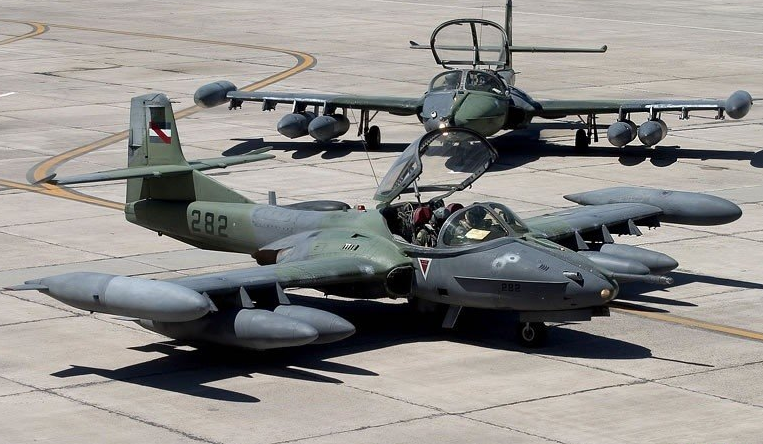
A-37 "Dragonfly"
Another "counterinsurgency" aircraft, which received wide distribution, became a Swiss education - training turboprop aircraft (TCB) - Rilatus PC-7, launched into mass production in 1978.
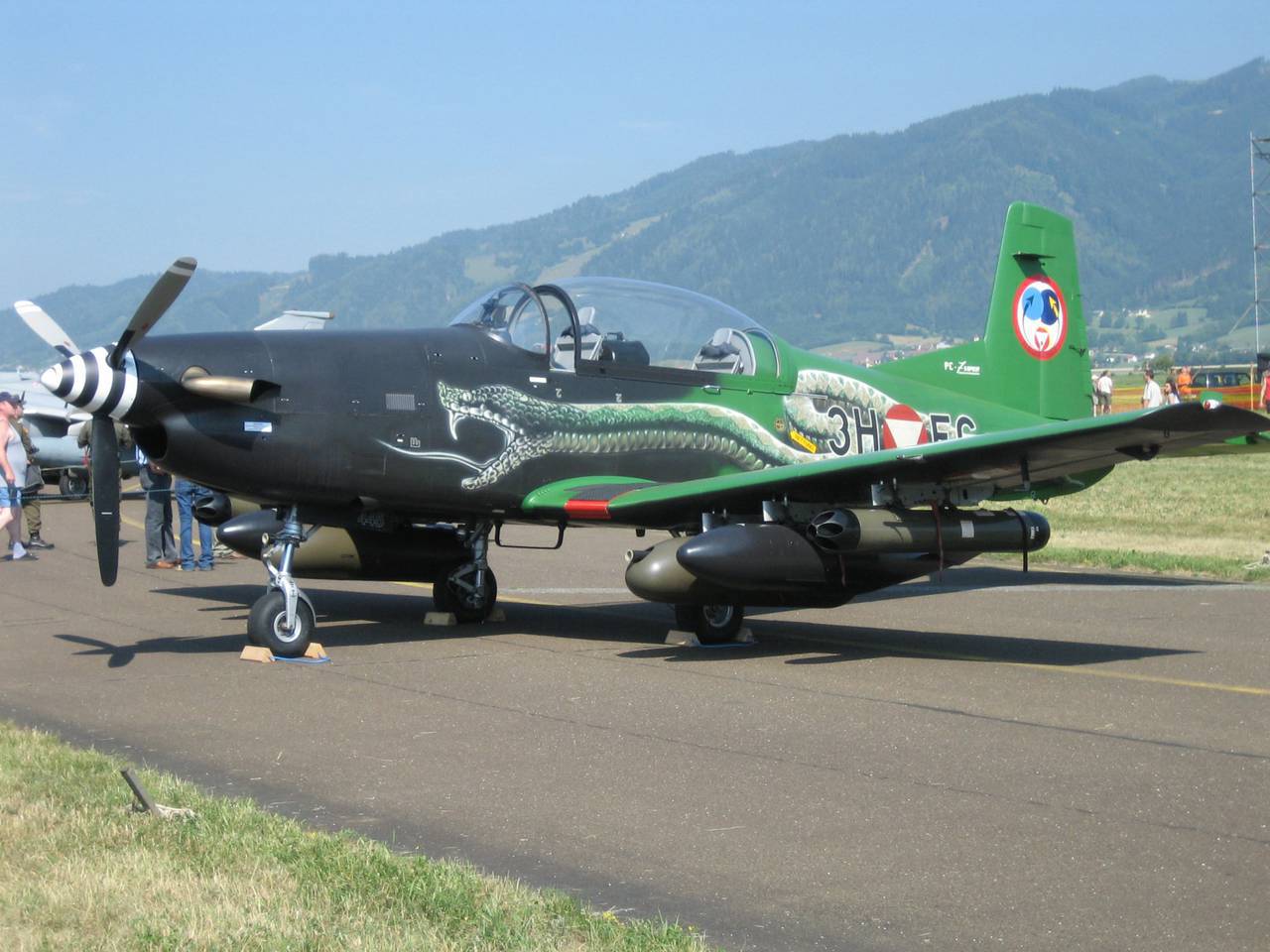
Rilatus PC-7
Put into service in the Air Force more than 20 countries, this low-wing monoplane, c, retractable tricycle landing gear was popular among pilots and maintenance personnel. There were built more than 450 vehicles of this type.
The aircraft is a very successful turboprop Pratt Whitney Canada PT6A-25A 650 hp PC-7 could carry up to 1040 kg payload to 6 knots external suspension. Including: NAR, machine gun containers, bombs and incendiary tanks.
Despite the initially peaceful trainer machine status RS-7 is very actively used in combat. Often on the set of Switzerland unarmed aircraft and suspension components mounted sights already in countries of the operator, that allows you to bypass the Swiss legislation restricting the supply of arms.
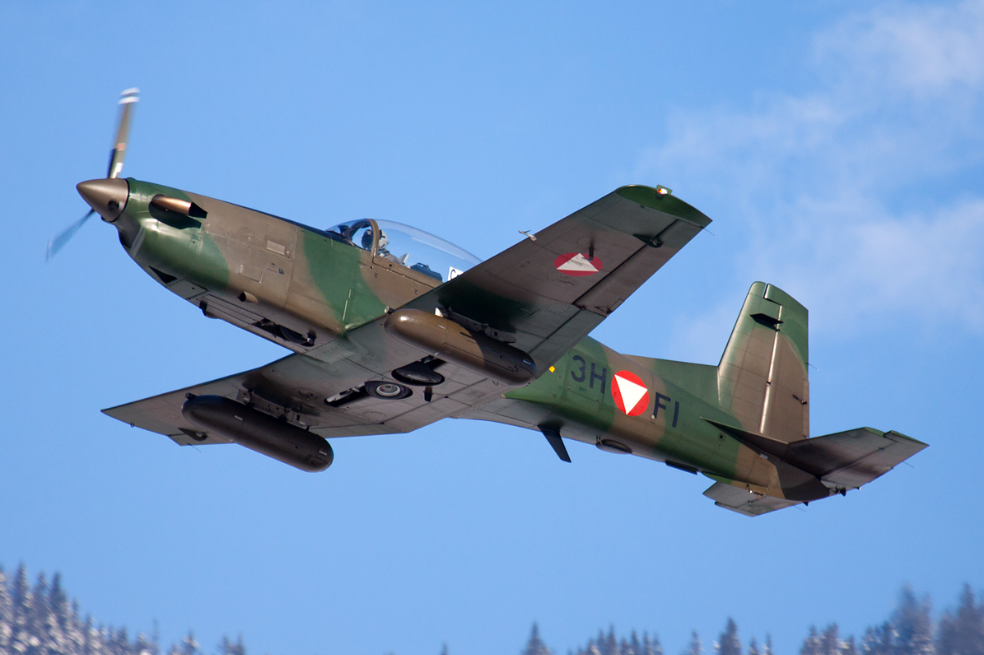
The largest armed conflict involving "Pilatus" became the Iran-Iraq war. PC-7 used Iraqi Air Force to provide close air support, as scouts-spotters, they even sprayed with chemical warfare agents.
Chad Air Force used "Pilatus" to bomb rebel positions, both on its own territory and in neighboring Sudan.
In Guatemala, the PC-7 attacked by rebel camps from 1982 until the end of the conflict in 1996.
In 1994, the Mexican Air Force PC-7 was used for attacking positions "EZLN" in Chiapas. This action by the Swiss government was deemed illegal because the planes were supplied only for educational purposes and without weapons. As a result, Switzerland has introduced a ban on the supply of PC-7 in Mexico.
A very significant role armed PC-7 played in the elimination of the Angolan opposition movement UNITA. They flew European and South African pilots hired by the Angolan government through the South African company "Executive Autkoms" specializing in providing services in the field of security. Planes loaded assault strikes on militant positions and camps, as well as used as an advanced aircraft gunners, "marking" phosphorus munitions targets for the MiG-23.
Further development of the Pilatus PC-7 aircraft became Pilatus PC-9 and Pilatus PC-21.
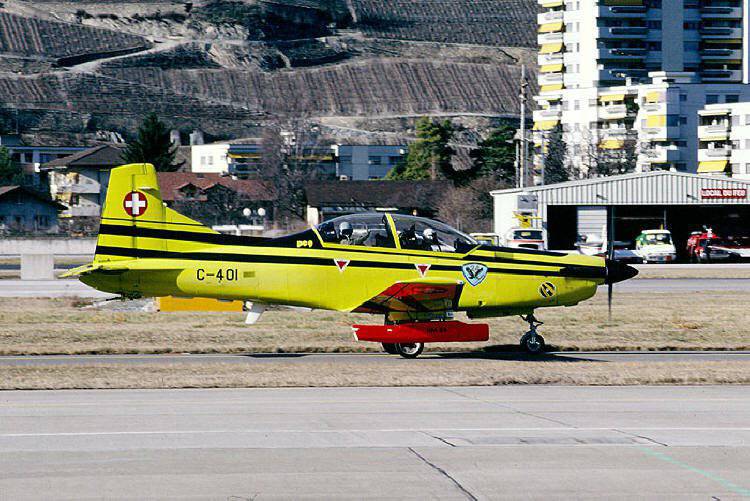
Pilatus PC-9
PC-9 differs from the PC-7 engine Pratt & Whitney Canada PT6A-62 shaft horsepower 1150l.s., Reinforced airframe, improved airfoil fuselage and wings and an ejection seat. Production began in 1986. It carries the same payload, as well as PC-7. Its basically ordered the country that already have experience in operating the PC-7. Total produced about 250 RS-9. This aircraft is in contrast to the earlier model did not have much combat use. PC-9 are in the Air Force in Chad and Myanmar involved to perform reconnaissance missions and counterinsurgency.
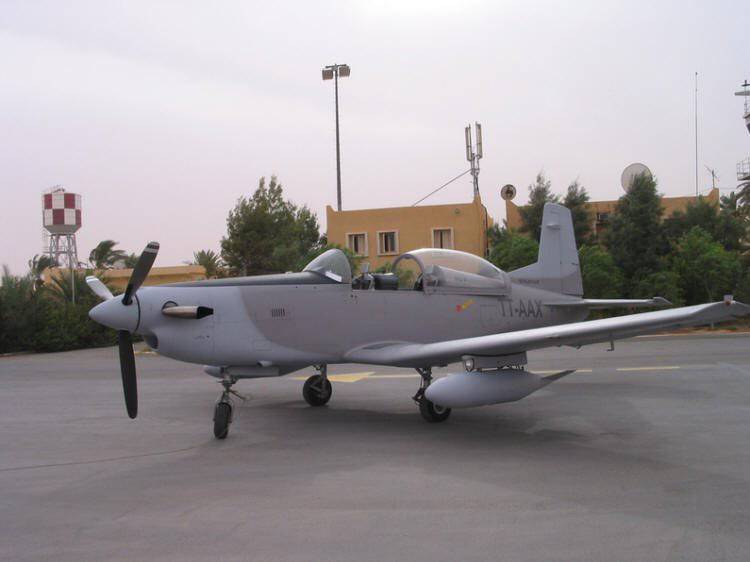
PC-9 Air Force in Chad
At present, the Israeli company «Elbit Systems» is working to improve the strike potential PC-7 and PC-9. It is assumed that after appropriate modifications increase information awareness and pilots be possible to use high-precision aircraft armament.
On the basis of the Swiss Pilatus PC-9 was built in the U.S. TCB T-6A Texan II.
The most significant external honors American aircraft from its Swiss "grandparent" is a modified form of the front of the cockpit.
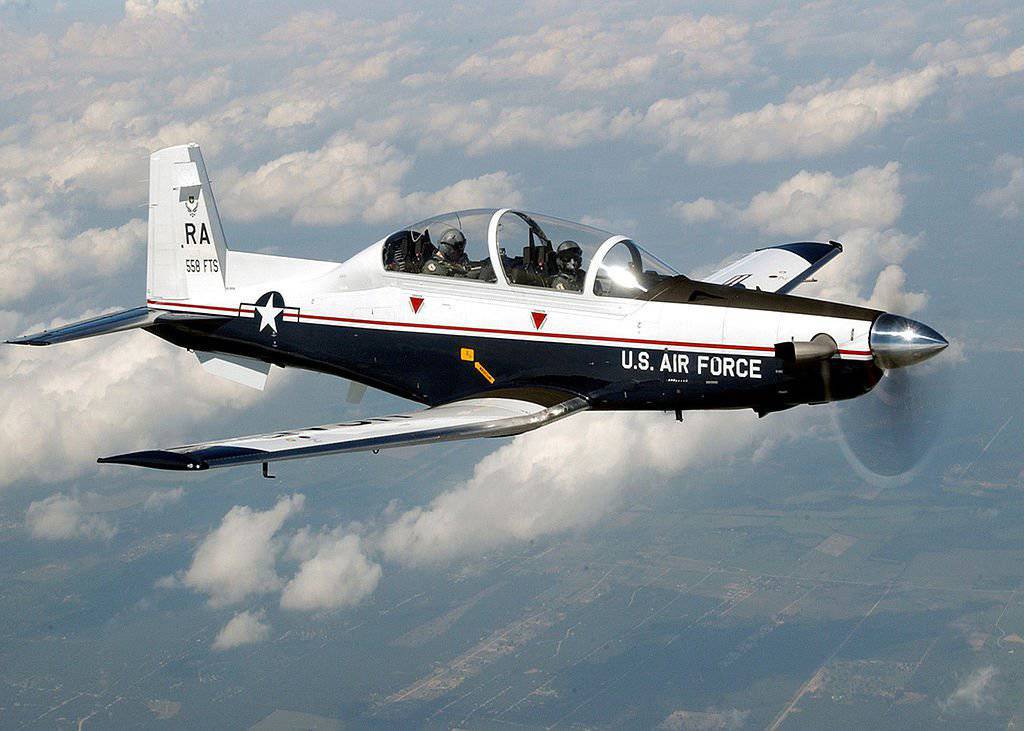
T-6A Texan II
Aircraft avionics Texan II allows you to use the machine not only for the initial training of pilots, but also for training pilots to perform a variety of combat missions. Arms located on six hardpoints.
Created as a specialized version of the shock machine, designated AT-6B. The aircraft is designed for different tasks: surveillance and reconnaissance with the possibility of high-precision coordinate registration, streaming video and data, close air support, advanced aircraft guidance, participation in operations to combat drug trafficking, as well as for reconnaissance in disaster areas.
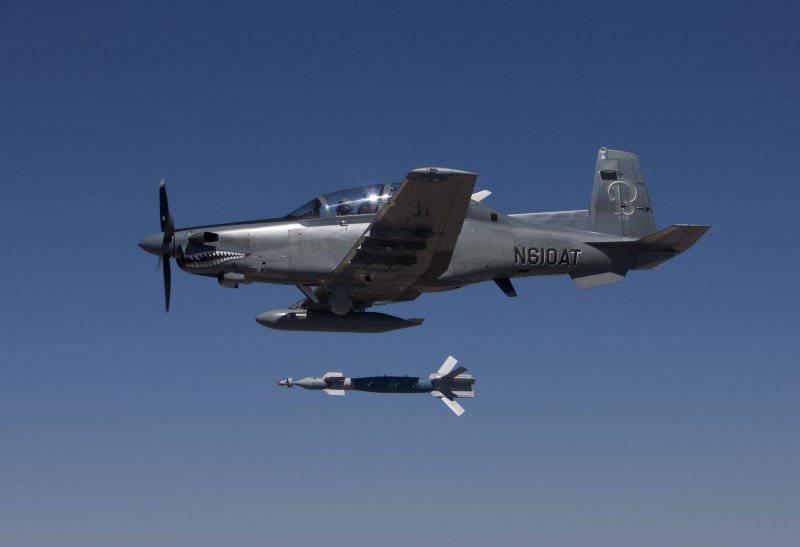
AT-6B
Compared with CF aircraft is equipped with a more powerful turboprop engine, improved sighting and navigation system and a container with equipment day and night vision. Installed armor protection for cab and engine. Protection system IR and laser guided missiles homing "ground-to-air" and "air" may include illumination warning system and automatic ejection of IR-traps. Plane set: control system EW ALQ-213 radio system is protected by ARC-210 data link equipment.
Available on the AT-6B equipment allows you to apply various precision-guided munitions, including Hellfire missiles and Maverick, guided bombs Paveway II / III / IV and JDAM, payload weight remained the same as in the "Pilatus". Street armament consists of two 12.7-mm machine guns.
Pilatus PC-21 first flew in 2002, and from 2008 aircraft delivered to the customers. When designing the PC-21 specialists «Pilatus» used all the experience gained by the family of machines PC. Currently produced vehicles of this type there are not many (about 80).
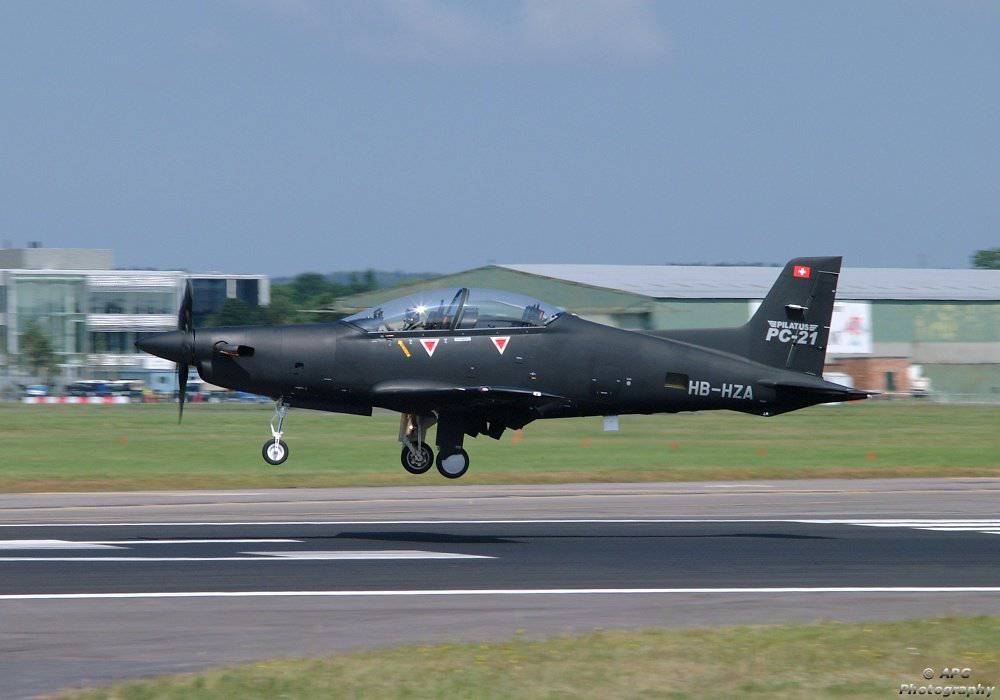
PC-21
Applied to PC-21 wing aircraft provided higher roll rate and maximum flight speed than in the case of PC-9. When creating this aircraft was assumed that it will be possible to train pilots of any profile. RS-21 is equipped with a complex programmable flight management systems, allowing to simulate aircraft flight characteristics of different classes and perform various missions. Much attention is paid to reducing operating costs and ease of ground handling of aircraft.
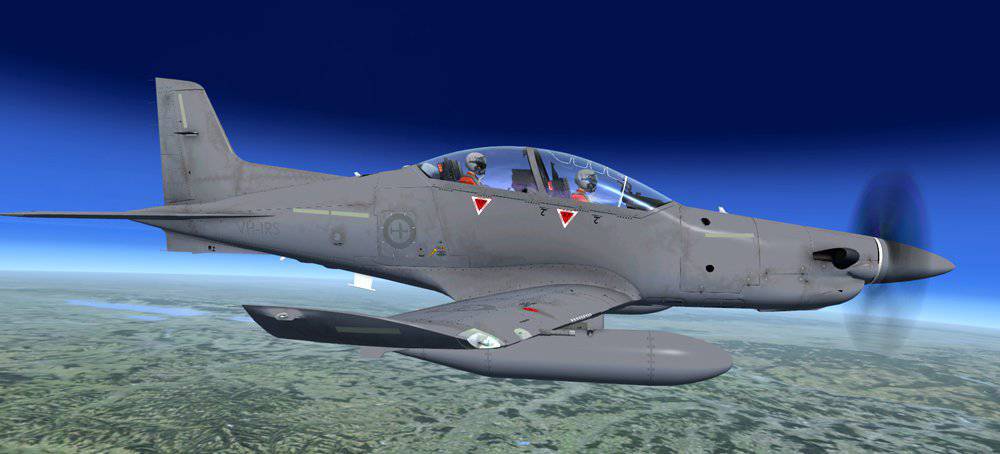
The aircraft has five suspension points for weapons such as "air-land". In addition to learning and teaching and training purposes, PC-21 can be used in "anti-terrorist operations." Potential customers are specialized "counterinsurgency" version of this machine with weapons and armored vehemently existing however, so far only in the project.
Hallmark of the Brazilian aircraft industry became TCB Embraer EMB-312 Tucano. He is one of the most successful modern trainer aircraft, has been recognized as in the Brazilian Air Force, as well as abroad.
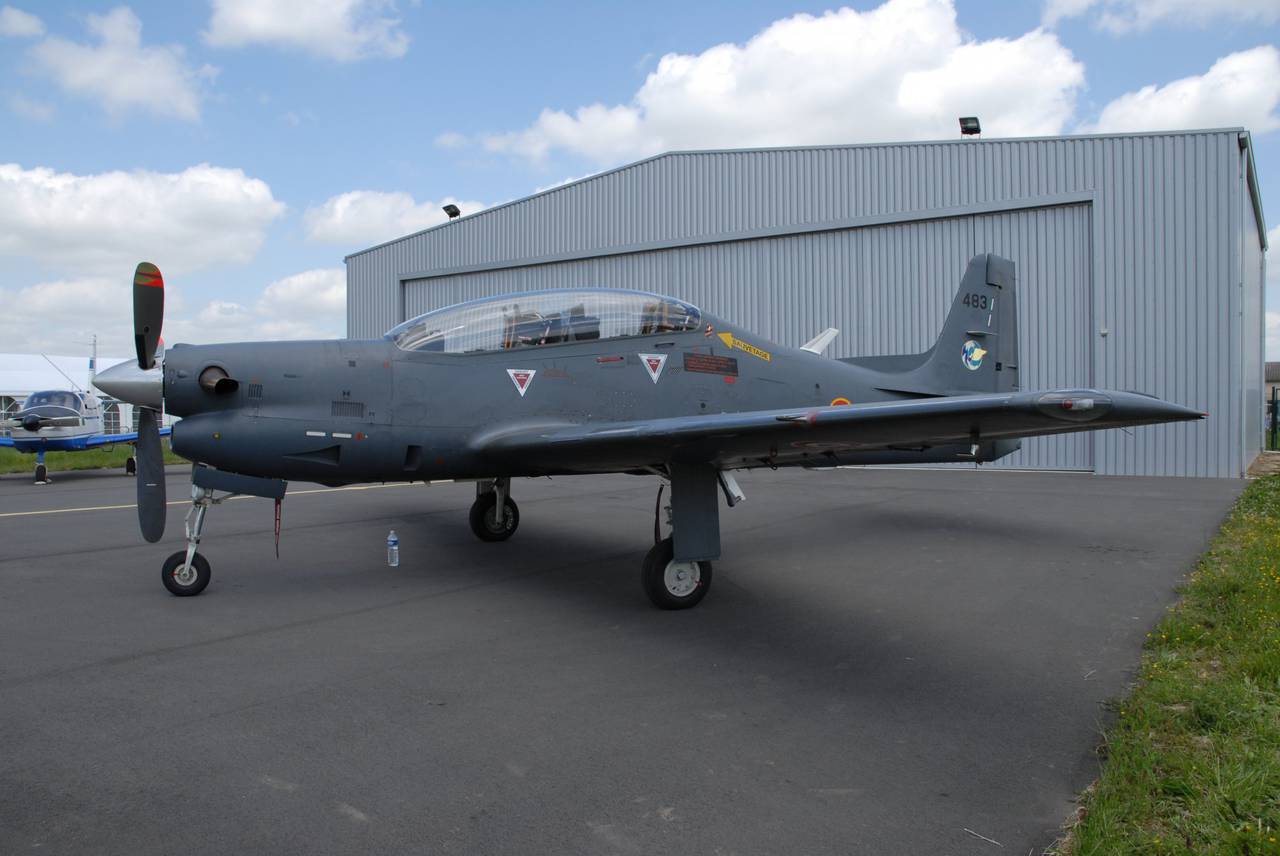
Embraer EMB-312
Still in the design process it was assumed that the aircraft will be used not only for training of Air Force pilots, as well as a light attack aircraft, capable of efficiently at relatively low cost used in counterinsurgency operations, where there is no threat from fighters and modern air defense systems.
On four underwing pylons housed armament general weighing up to 1000 kg. EMB-312 aircraft in the embodiment may use a machine-gun attack aircraft containers, rockets and bombs.
Much of the success of the aircraft was predetermined rational layout, the aircraft turned out pretty easy - its dry weight does not exceed 1870 kg and turboprop Pratt & Whitney Canada PT6A-25C (1 x 750 l. C.). To rescue the crew EMB-312 aircraft equipped with two ejection seats.
Under the designation T-27 "Tucano" planes began with September 1983 by the armed forces combat units Brazilian Air Force and nearly 20 countries. It was built more than 600 vehicles of this type. South and Latin America actively used "Tucano" as patrol, counterinsurgency and combat drug trafficking.
Besides the training options with the ability to combat application was developed specialized light attack AT-27 "Tucano". The plane was carrying tighter combat load, but had modified sighting equipment and light armor protection.
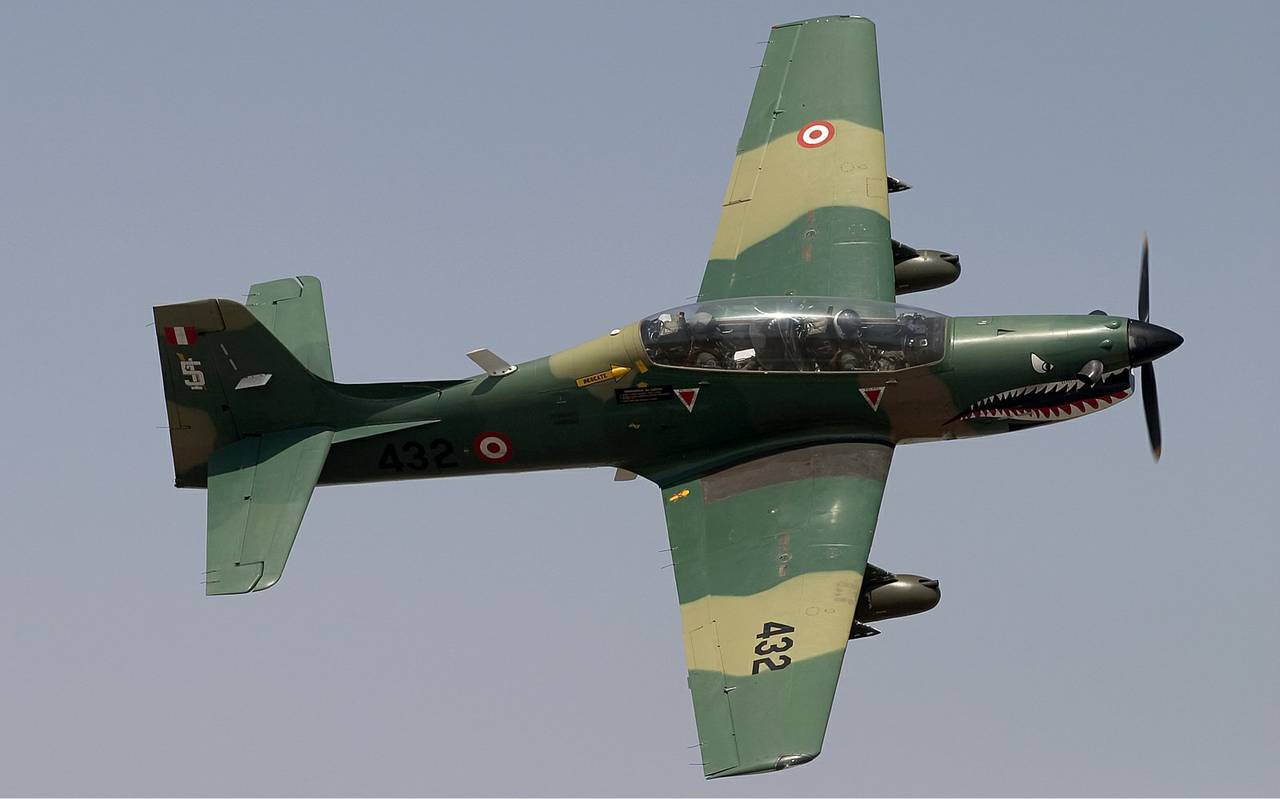
AT-27
Air Force light attack aircraft were used in armed conflict Peru with Ecuador Cenepa River in 1995.
Venezuelan Air Force lost some AT-27, who were shot down by anti-aircraft fire and interceptors F-16A during an anti-government uprising in November 1992.
Participation in full-scale combat operations for this aircraft was not too frequent use of conventional steel patrol and reconnaissance missions and actions to curb drug trafficking. In the bank "Tukano" no one has successfully intercepted and shot down the plane with a load of drugs.
In most cases, drugs are used for transportation of small piston aircraft, in comparison with which this turboprop machine looks a real fighter.
Further development of the EMB-312 Tucano EMB-314 was the Super Tucano, production of which began in 2003. The upgraded aircraft received turboprop Pratt & Whitney Canada PT6A-68C power of 1600 hp Airframe was reinforced cockpit received kevlar protection and new avionics.
The upgraded aircraft became long by almost half a meter and significantly potyazhelel (empty weight of the aircraft is equal to 3,200 kilograms).
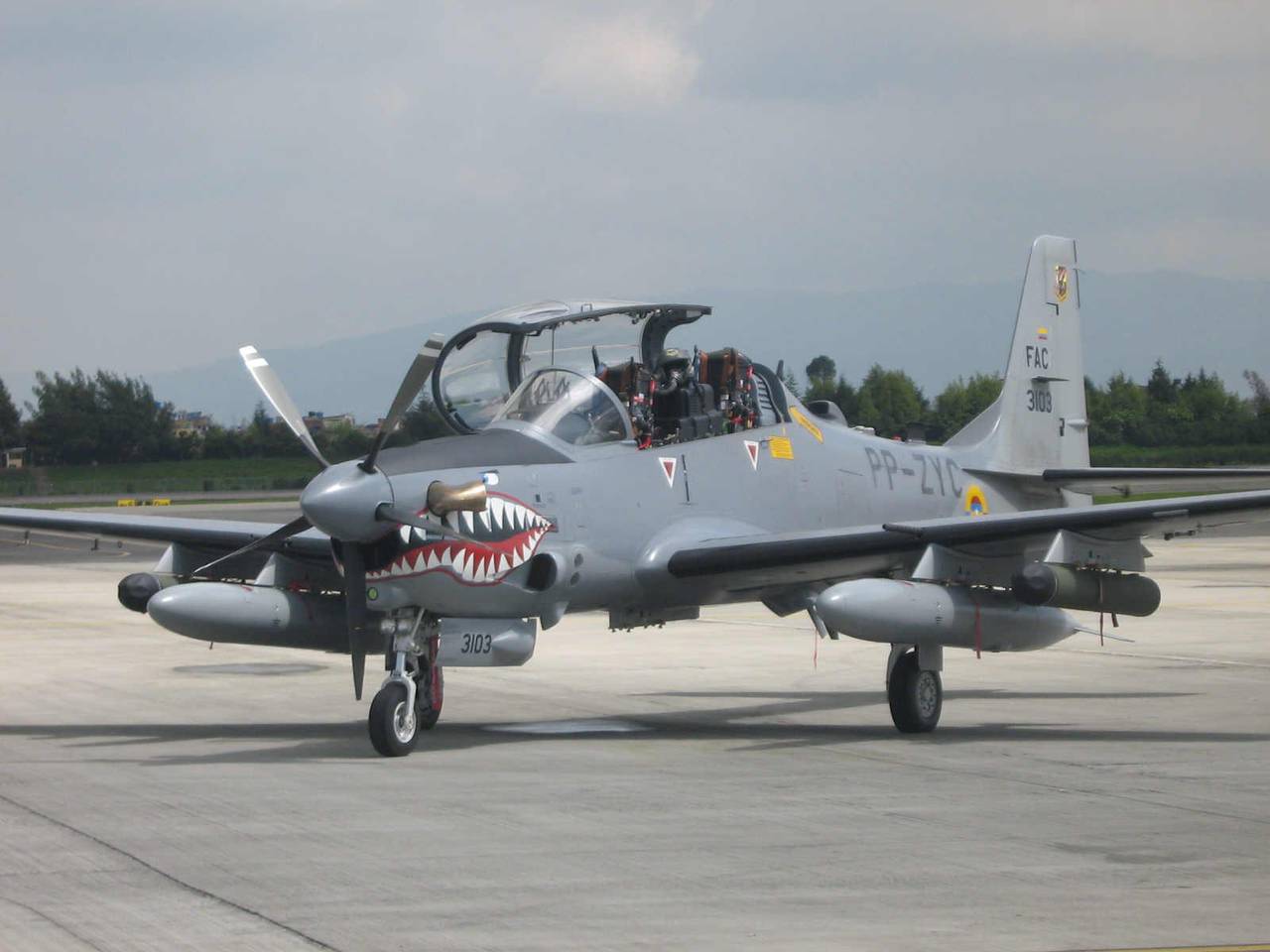
EMB-314 Super Tucano
Was strengthened weapons "Super Tucano" received two built machine gun 12.7 mm in the wing root, on five hardpoints can be placed combat load weighing up to 1550 kg. The range of weapons including machine guns and gun pods with weapons caliber 7.62 to 20 mm, guided and unguided bomb and missile weapons.
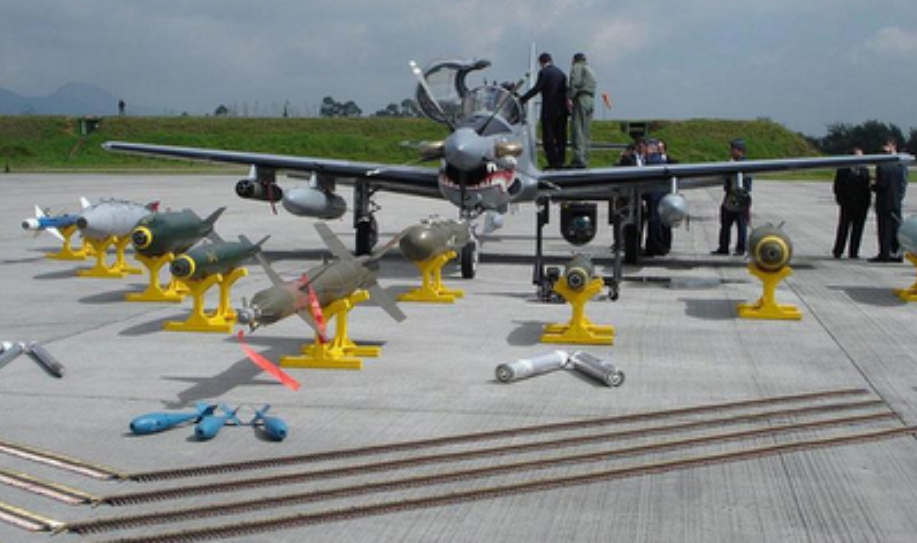
Single light attack variant was designated A-29A instead copilot seat on the plane was set-sealing fuel tank capacity of 400 liters.
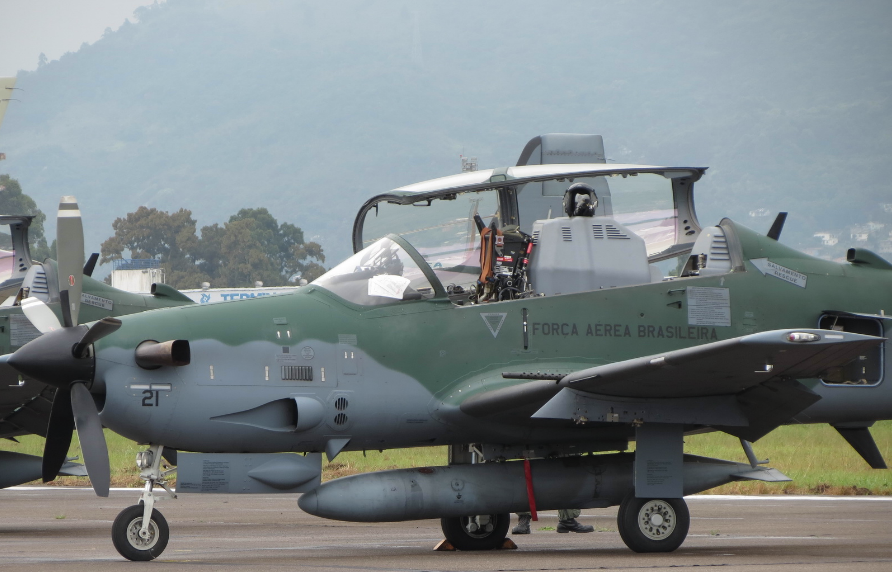
Single Forward A-29A Super Tucano
Modification of A-29B has two jobs pilots, and moreover is equipped with various electronic equipment needed to control the battlefield.
Like the previous model "Super Tucano" is popular in countries engaged in combating narkokortelyami and various rebels. Currently, more than 150 stormtroopers "Super Tucano" made the Air Force a number of countries, flew 130,000 hours, including 18,000 hours in combat missions.

Most intensively used in the fighting A-29B of the Colombian Air Force. The first case of Super Tucano combat occurred in January 2007, when the aircraft struck the rocket and bomb the camp forming "the Revolutionary Armed Forces of Colombia." In 2011-2012, they applied precision strikes ammunition Griffin laser guided strong points guerrillas. In 2013, Colombian light attack aircraft also accomplishes combat missions to fight the rebels and drug trafficking.
Interest in acquiring the "Super Tucano" expressed the U.S. Special Operations Command. After lengthy negotiations, in February 2013 the U.S. and Brazilian Embraer signed a contract, according to which the A-29 aircraft will be built under license in the United States. The contract involves the construction of at least 20 attack aircraft in a slightly modified configuration, which in the future will support special units from the air.
Unlike Brazilian "Super Tucano" American assembly must be completed the same avionics mounted on light attack aircraft AT-6B. Specifically provides an opportunity to use a night light and use precision-guided munitions, which will significantly increase the potential impact of storm troopers.
Just negotiating the purchase or lease of "Super Tucano" underway in Afghanistan and Iraq.
The success of the Brazilian Embraer was determined by the fact that its light attack aircraft appeared in what is called "the right time and right place."
Their flight, operational, combat characteristics and cost largely conform to the requirements of the Air Force in need of such a plane. Despite the fact that "Tucano" appeared later than "Pilatus", played a significant role in the absence of Brazilian law restrictions on the supply of weapons to areas of fighting.
Sources:
http://www.pilatus-aircraft.com/
http://www.cofe.ru/avia
==========================
0
17.6K
15
Thread Digembok
Mari bergabung, dapatkan informasi dan teman baru!

Militer
20.4KThread•10.7KAnggota
Tampilkan semua post
TS
boleroes11
#11
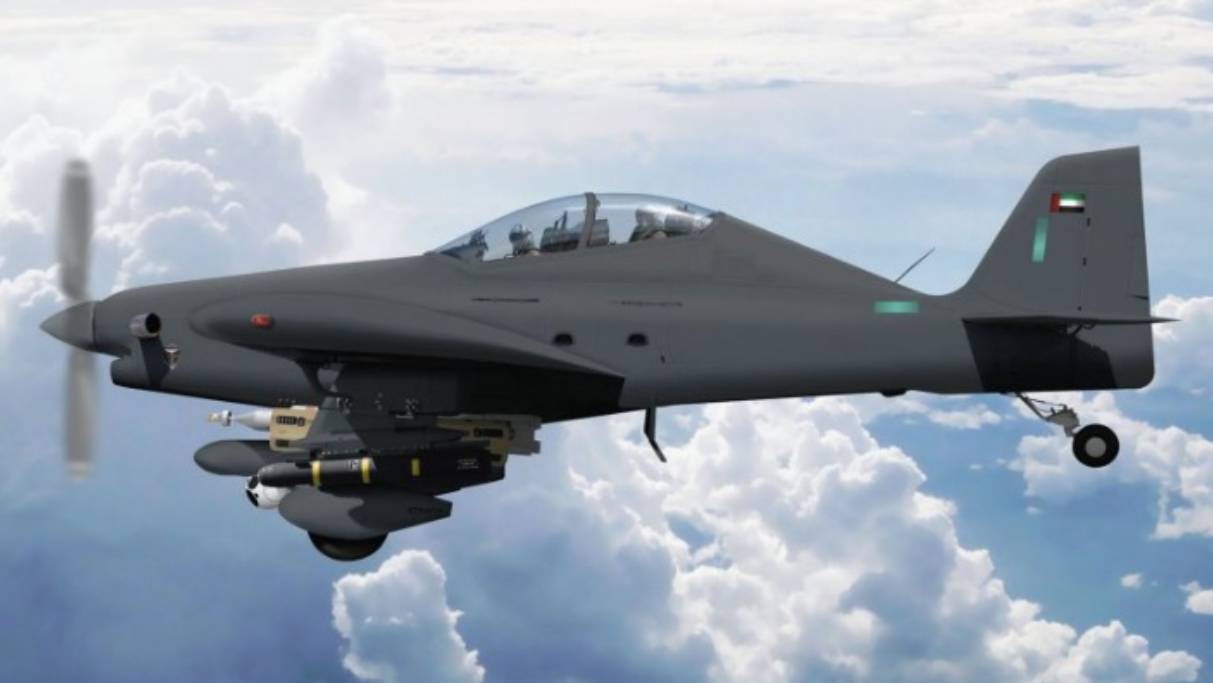
Which began in the 21 century, the global war on "international terrorism" fueled much interest in the light "counterinsurgency" stormtroopers. In many countries, work began on the creation of new and adaptation of existing shock purposes of training, light transport and agricultural aircraft.
One of the most interesting machines that appointment became the ongoing Test South African reconnaissance and light attack combat aircraft-AHRLAC (Advanced High Performance Reconaissance Light Aircraft).
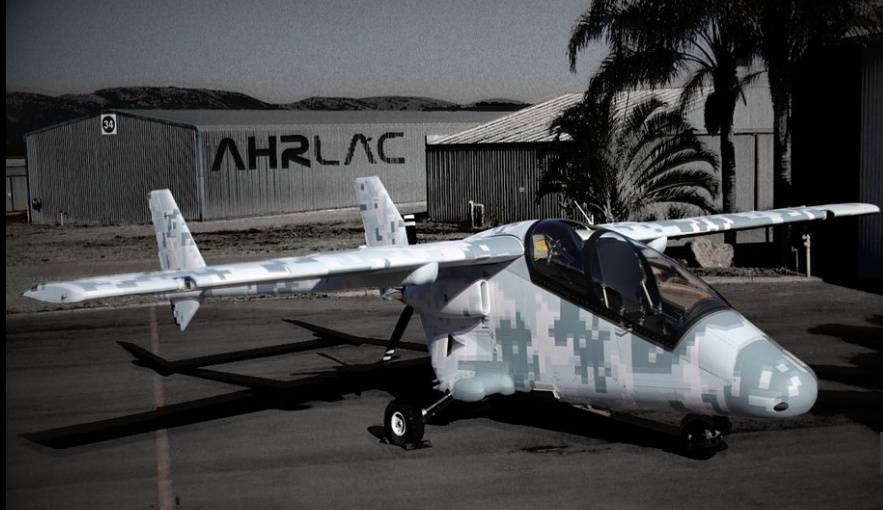
Reconnaissance and attack combat aircraft AHRLAC
This two-seater length of 10.5 m and with a wingspan of 12 meters, is equipped with a turbo-prop engine Pratt & Whitney Canada PT6A-66 power of 950 hp The peculiarity of this vysokoplana - forked tail and a pusher propeller, which is located in the rear fuselage.
At takeoff weight of about 4000 kg of payload planned placed on six hardpoints must be more than 800 kg. As an integral weapons used 20mm cannon. The lower part of the fuselage of the aircraft is designed as a "conformal container" of quick options to accommodate a variety of equipment.
With a full combat load the aircraft take-off distance must be 550 m Maximum speed of the aircraft will be about 500 km / h, the ceiling - 9500 m, and the range - 2100 km with a full internal fuel (it is also possible to use two external fuel tanks). Duration patrol in the air should reach 7.5 - 10 hours.
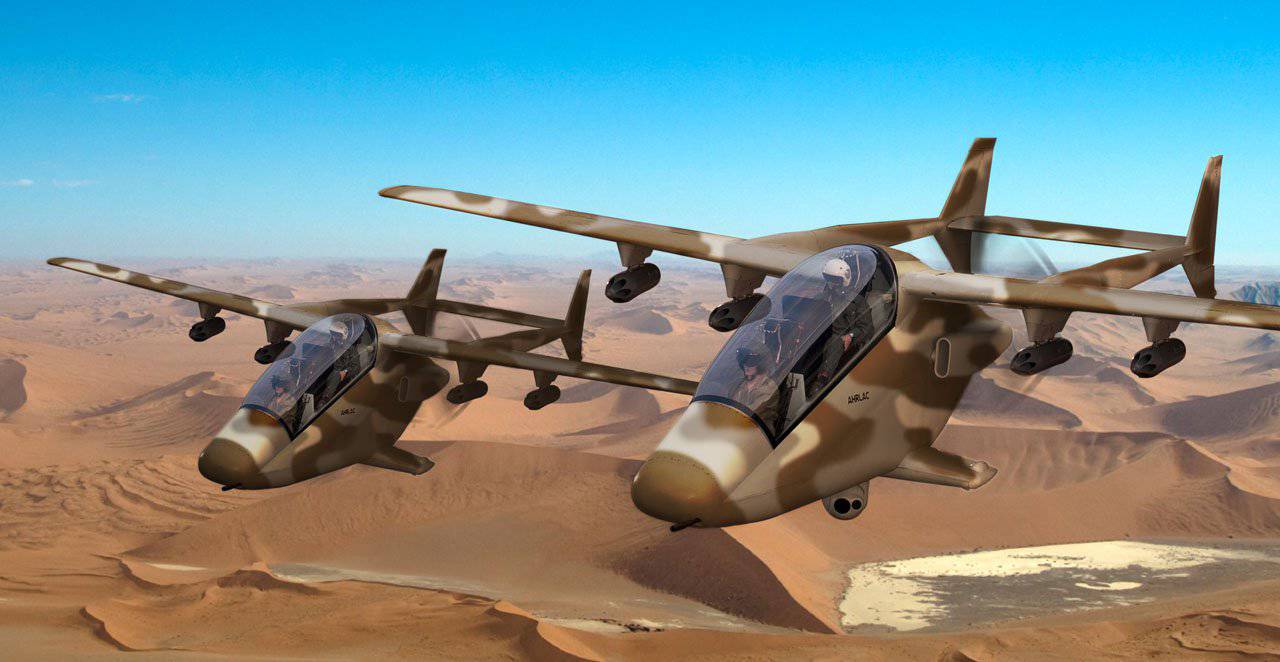
AHRLAC is an apparatus increasingly popular concept of "manned UAV" and is designed to address a wide range reconnaissance, surveillance, patrols, attacking ground targets in the framework of counterinsurgency. This concept involves the creation of a light attack aircraft, operating cost is comparable to the cost of operating UAVs middle class. While on patrol in the air and hardware capabilities intelligence, surveillance and remote data transmission should be appropriate or even better than UAVs.
Aircraft for counterinsurgency created recently feature is the setting them navigation, search and reconnaissance and communications equipment enabling act at any time, as well as to broadcast real-time video images obtained from the cameras. In terms of weapons became the focus be on controlled precision-guided munitions.
In fully meets these qualities created by Alliant Techsystems lightweight counterinsurgency aircraft Cessna AC-208 Combat Caravan. Aircraft developed under contract with the U.S. government to re-Iraqi Air Force. It is based on a single-engine turboprop Cessna 208 general-purpose Grand Caravan.
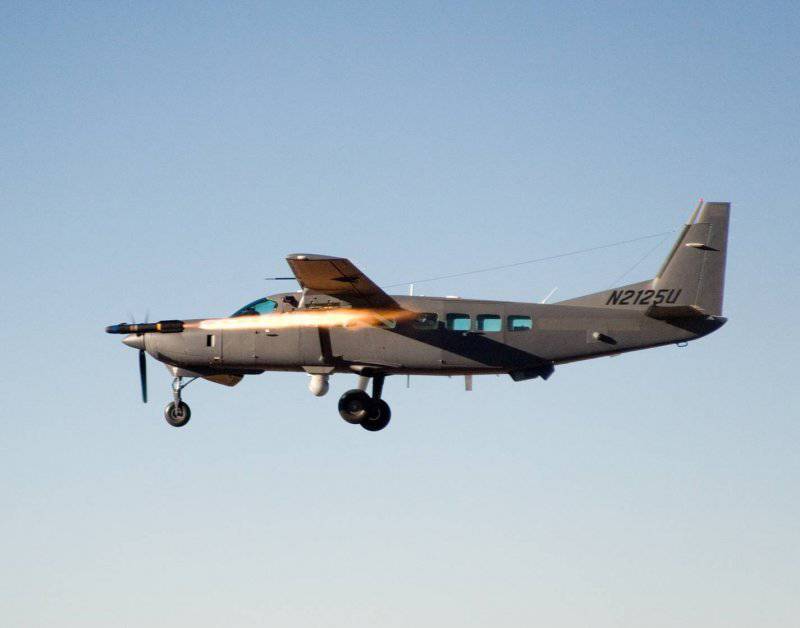
Cessna AC-208 Combat Caravan
Avionics of this aircraft lets you perform tasks specific optoelectronic aerial reconnaissance and apply precision air attack. It consists of: small-sized digital computing device, optoelectronic system (color camera range detection, infrared camera, laser rangefinder and laser designator), 18-inch LED tactical situation, color LCD displays, data link equipment on the ground command posts, VHF radio, etc.
Aircraft with a takeoff weight of 3629 kg equipped with economical turboprop Pratt & Whitney Canada PT6A-114A power 675 hp While on patrol in the air for about 4.5 hours. Maximum speed of 350 km / h Can be operated from unpaved runways of at least 600 meters.
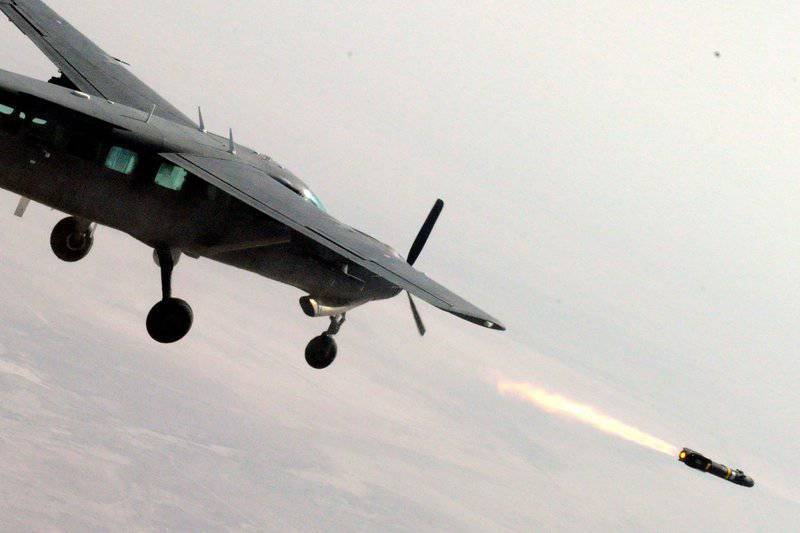
This aircraft operated since 2009, introduces the concept of air command and intelligence points to the possibility of applying, if necessary, independent strikes with precision weapons.
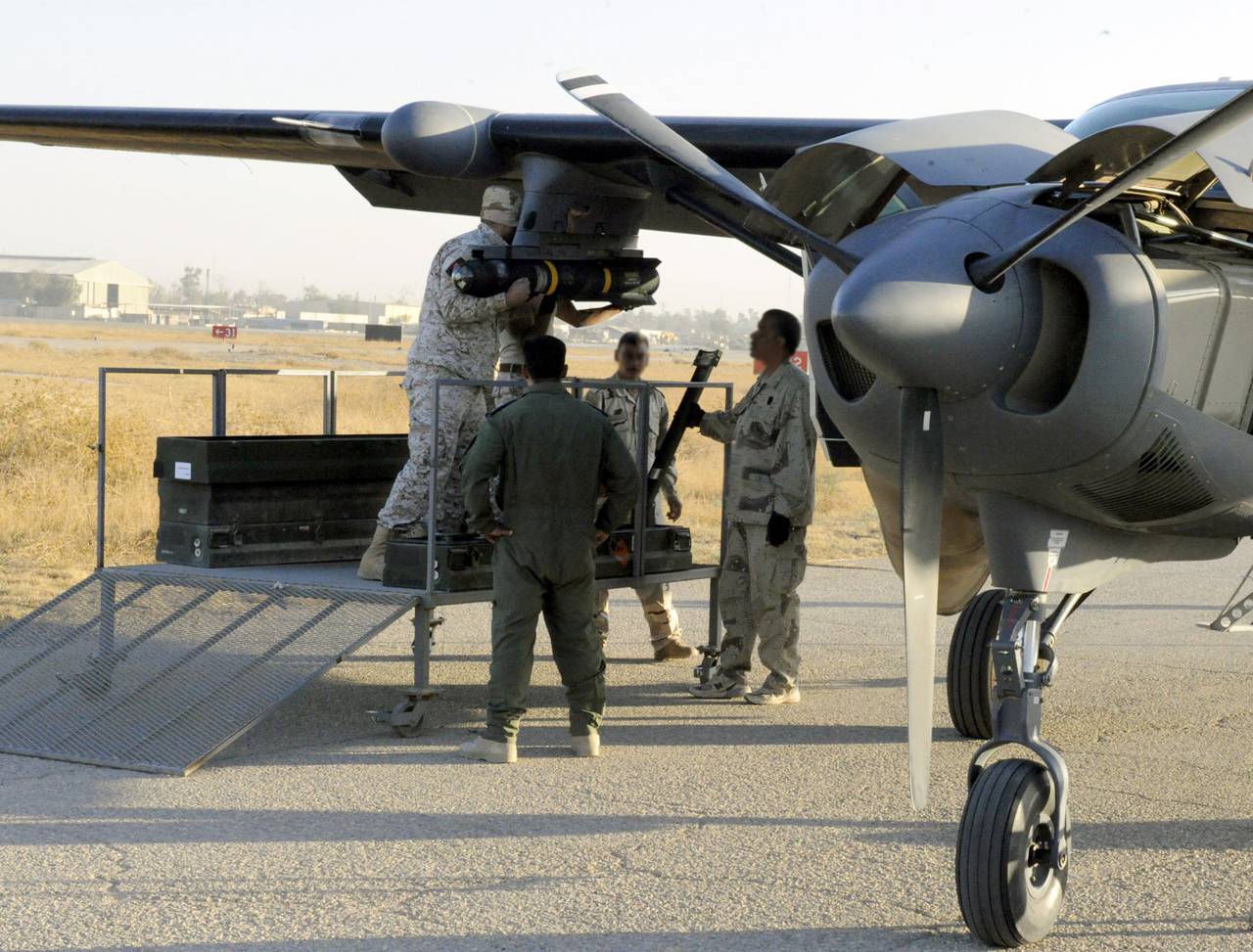
As weapons are used by two missiles AGM-114m / K Hellfire "air - land" suspended on underwing pylons. The cabin is equipped with ballistic panels to protect the crew from small arms. At the request of Iraqi officials, guided weapons is necessary to avoid damage associated with air strikes on rebels.
In 2009, at the Paris Air Show was presented light attack AT-802U. The plane is based on the American double agricultural aircraft AT-802 Air Tractor, produced since 1993. At takeoff weight 7257 kg plane can reach speeds of 370 km / h Engine Pratt & Whitney Canada PT6A-67F power of 1600 hp Total fuel capacity allows for patrolling more than 10 hours.
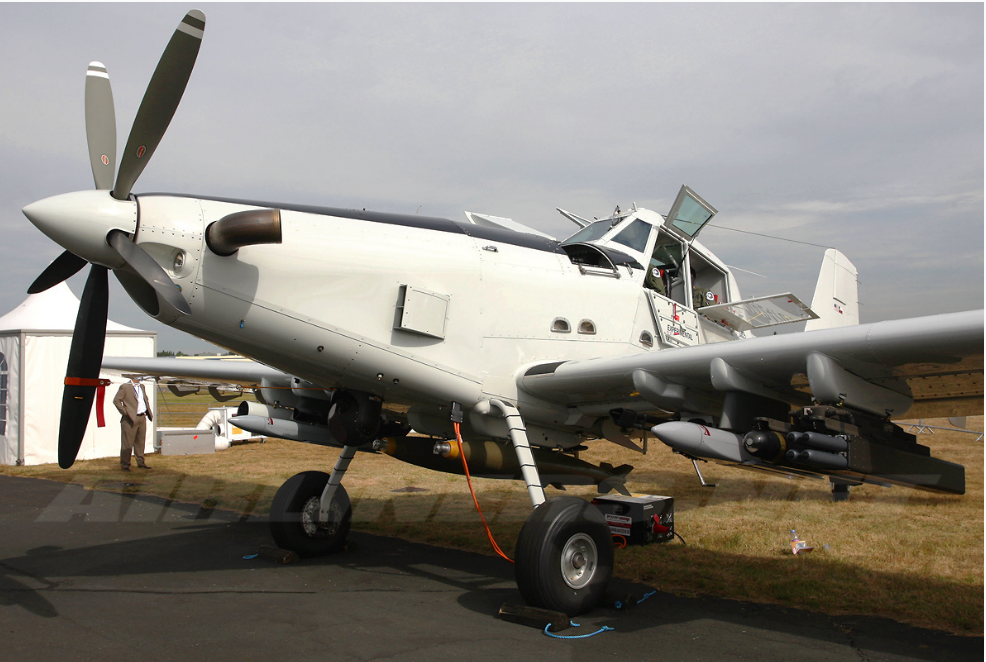
AT-802U
The basic version AT-802U different booking engine and cockpit, self-sealing fuel tank and a reinforced fuselage structure and wings. Set of weapons and special equipment AT-802U is designed and installed by specialists of IOMAX (Muresvill, North Carolina).
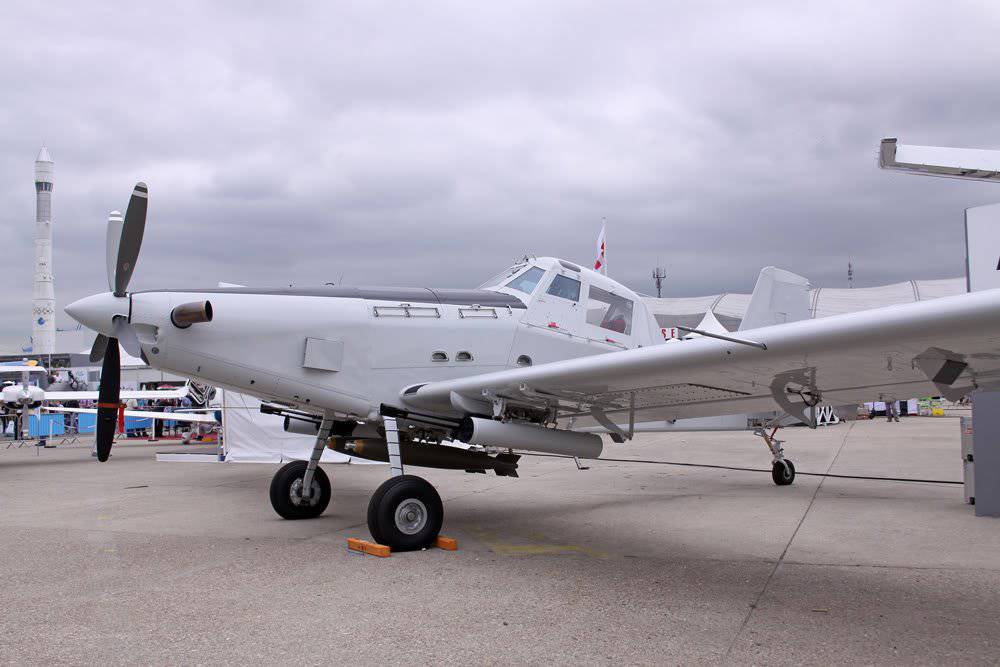
Under the wing has six hardpoints for placing weapons. Possible suspension NAR blocks and bombs weighing up to 500 pounds (226 kg). As a machine-gun armament used containers with triple-GAU-19 machine guns / A "Gatling" 12.7 mm. The total weight of arms can reach 4000 kg.
To use SD-class "air - ground" type of laser-guided AGM-114M Hellfire II and DAGR (Direct Attack Guided Rocket) plane is equipped with optoelectronic sighting system AN / AAQ 33 "Sniper-XR" company "Lockheed Martin", operating in the visible and IR ranges. The system will allow the crew to search, detection, identification and tracking of ground (surface) targets at ranges of 15 - 20 km in all weather conditions and time of day, their laser illumination and guidance managed aircraft armament.
The aircraft is protected link that allows to transmit images in real time. The machine is equipped with a warning system missile launches automatic ejection "heat traps" means and electronic countermeasures AAR-47/ALE-47.
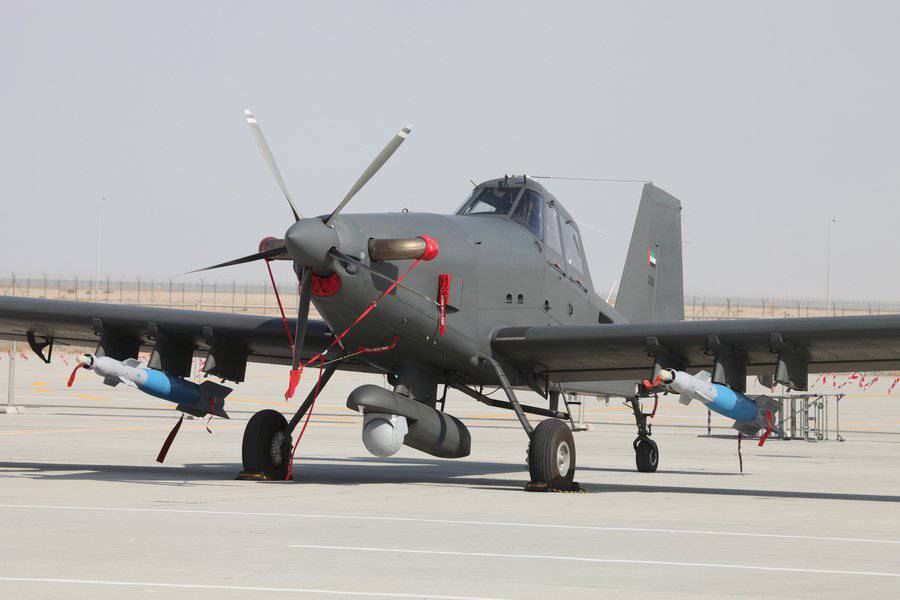
Airplane Air Tractor AT-802U successfully "field testing" in Colombia acting against local leftist rebels and cocaine drug lords. According to the contract in 2009 to 24 machines delivered UAE and six Air Tractor AT-802U surveillance aircraft in the version to be delivered in Jordan. Government of Afghanistan, Iraq and Yemen are often interested in this machine.
American company IOMAX, previously developed complex weapons reconnaissance attack aircraft Air Tractor AT-802U, now is working to create a similar reconnaissance-strike machines based on 710 Thrush aircraft competing with Air Tractor aircraft manufacturer for agricultural purposes - Thrush Aircraft Company of Albany (GA) . Combat aircraft developed on the basis of 710 Thrush, was designated Archangel (Block 3) Border Patrol Aircraft (BPA), carried IOMAX November 2012.

Archangel BPA
Air Tractor AT-802, and 710 represent Thrush options are almost one aircraft constructed Leland Snow in the 1950s, the appearance and characteristics of both cars are very close. Thrush Aircraft 710 has a slightly larger (35 km / h) speed at altitude, and gives a slightly better weight ratio of weapons and fuel. "Archangel" with takeoff weight of 6715 kg has a cruising speed of 324 km / h at a distance of 2,500 km.
The aircraft can carry on its six underwing hardpoints up to 12 missiles AGM-114 Hellfire, up to 16 70-mm rockets Cirit with laser guidance system, ASD to six Paveway II / III / IV or JDAM.
Archangel BPA container is equipped with electro-optical turret production FLIR Systems, ELINT systems and synthetic aperture radar. Double cabin with tandem crew is equipped with three 6-inch color multi-indicator, the pilot in the front cockpit, and one 6-inch and one 12-inch (for surveillance and target acquisition) indicators operator in the rear cockpit. Cab has dual controls.
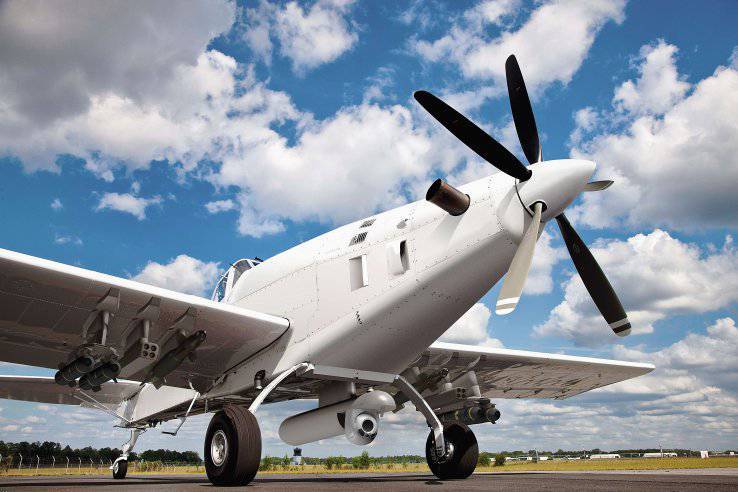
Unlike aircraft AT-802U, which is more designed for close air support and counter-insurgency using unguided weapons, "Archangel" is designed as a platform for exploration, monitoring and precision-guided munitions at altitudes of 3,000 to 6,000 meters, and at distances from 3 to 10 km from the target. Plane creators believe that the probability of survival of low-speed aircraft such as the Air Tractor, in typical problems of close air support using "melee weapon" in the presence of the enemy advanced MANPADS and anti-aircraft installations with guidance from the radar is very low. Therefore, when the defeat of targets with "Archangel" emphasis on the "remote" use of controlled precision-guided munitions, outside the zone of effective anti-aircraft fire.
Currently light turboprop patrol aircraft Archangel Block 3 Border Patrol Aircraft involved in the competition announced by the Philippine government to replace obsolete "counterinsurgency" aircraft Rockwell OV-10 Bronco. Philippines intend to purchase six aircraft close air support totaling 114 million U.S. dollars. Competitors "Archangel" stormtroopers are Brazilian Super Tucano, American Beechcraft AT-6 Texan II and the Swiss Pilatus PC-21.
"Archangel" can carry more weapons on the external load, than any competitor. The cost of the machine is about 8 million dollars, which is significantly less than the "Super Tucano" (12-13 million dollars).
Pronounced "counterinsurgency" orientation is currently being held in the U.S. test light combat aircraft turbojet "Scorpion".
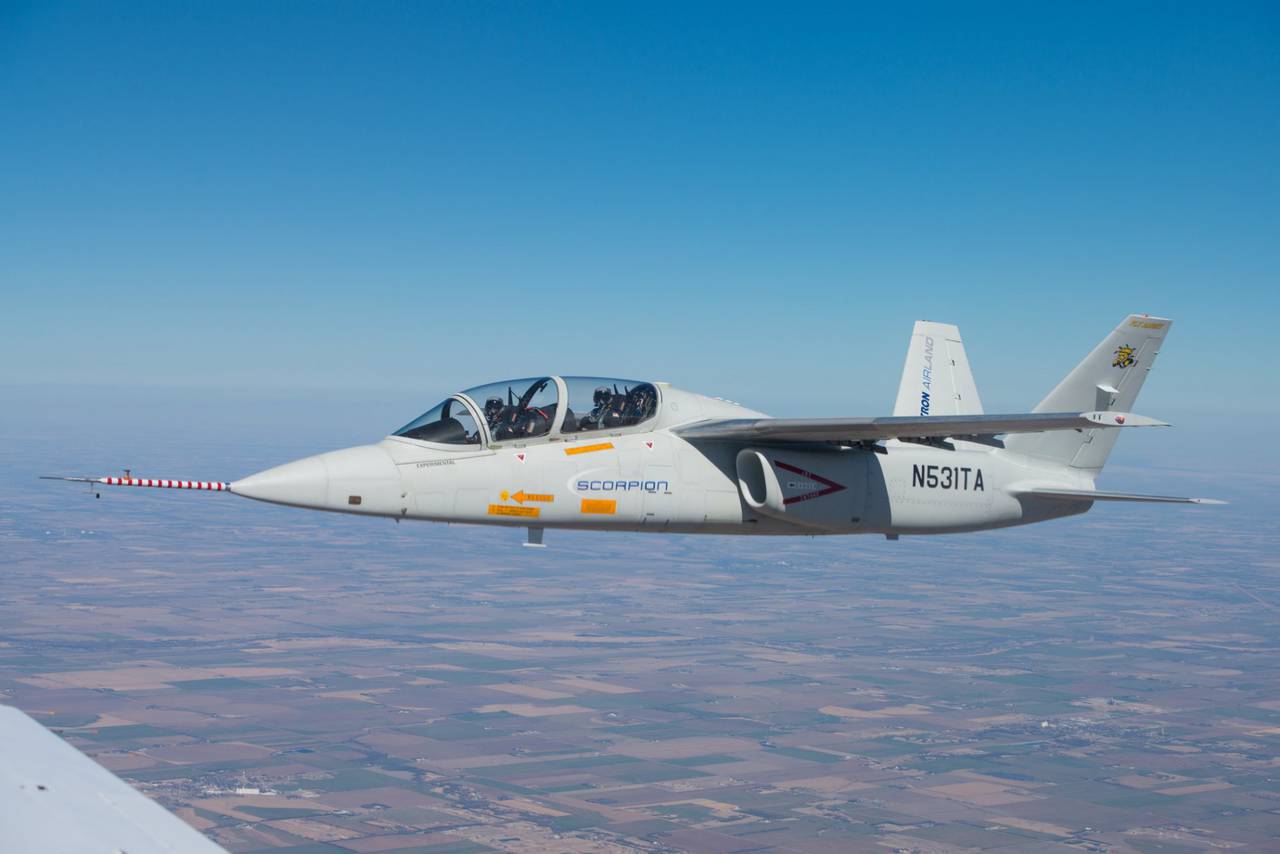
Light combat aircraft turbojet "Scorpion"
According to the company - Developer Textron AirLand, the new aircraft is designed for use in local conflicts, protecting the borders, the maritime patrol, in the fight against drugs.
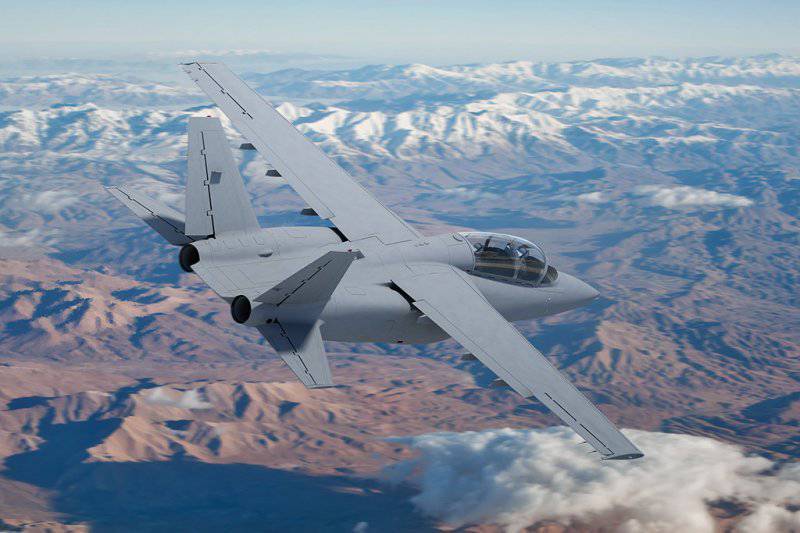
"Scorpion" is tunable inner compartment, which can be used for the placement of weapons, sensors or additional fuel. Compartment has a capacity to accommodate payload of 1362 kg. The airplane has six underwing nodes for the suspension arms or fuel tanks with a total mass of about 3000 kg. Maximum take-off weight of the aircraft will be 9600 kg, range 4440 km. The power plant consists of two aircraft Honeywell TFE731 turbofan engines with a total thrust of about 835.6 kN.
If the buyer is found, the aircraft can go into series production in 2015.
By "counter-insurgency" to fully include the armament in the U.S. "ganshipy" AC-130, armed with 25-mm, 40-mm and 105-mm guns.
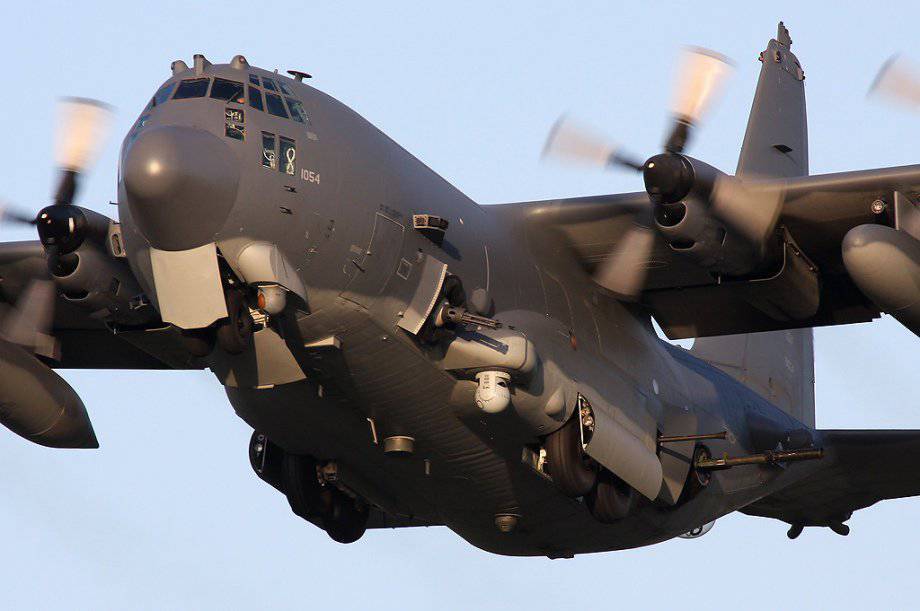
AC-130
Other armed aircraft based on the C-130 "Hercules" aircraft began to support special operations MC-130W Combat Spear.
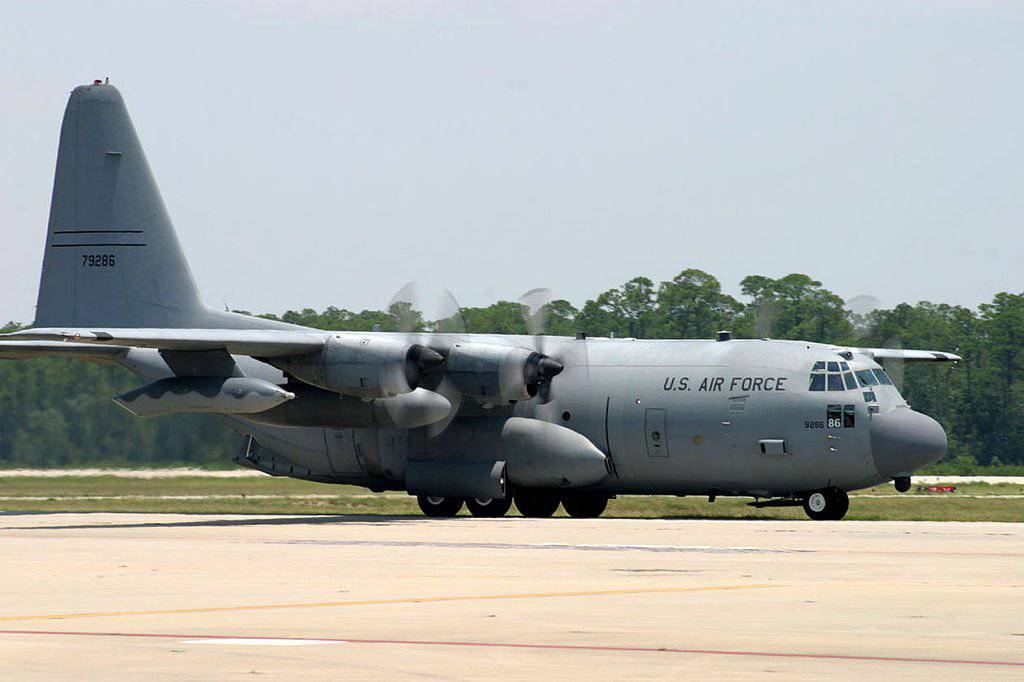
MC-130W Combat Spear
Four squadrons armed with MS-130, used for deep raids deep into enemy territory to deliver or receive goods and people in special operations.
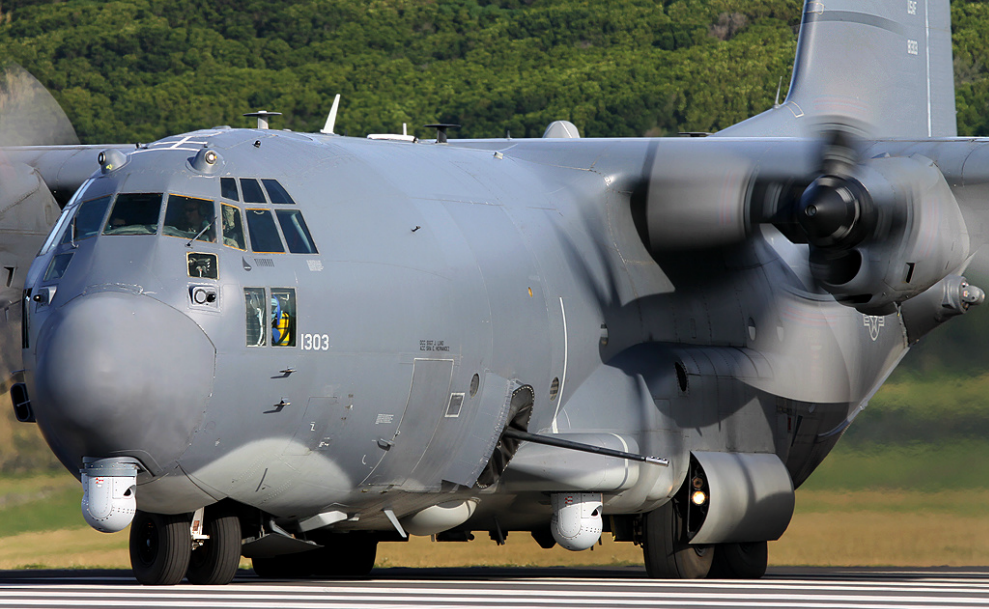
Depending on the task it can be mounted 30mm cannon and rockets Bushmaster Hellfire.
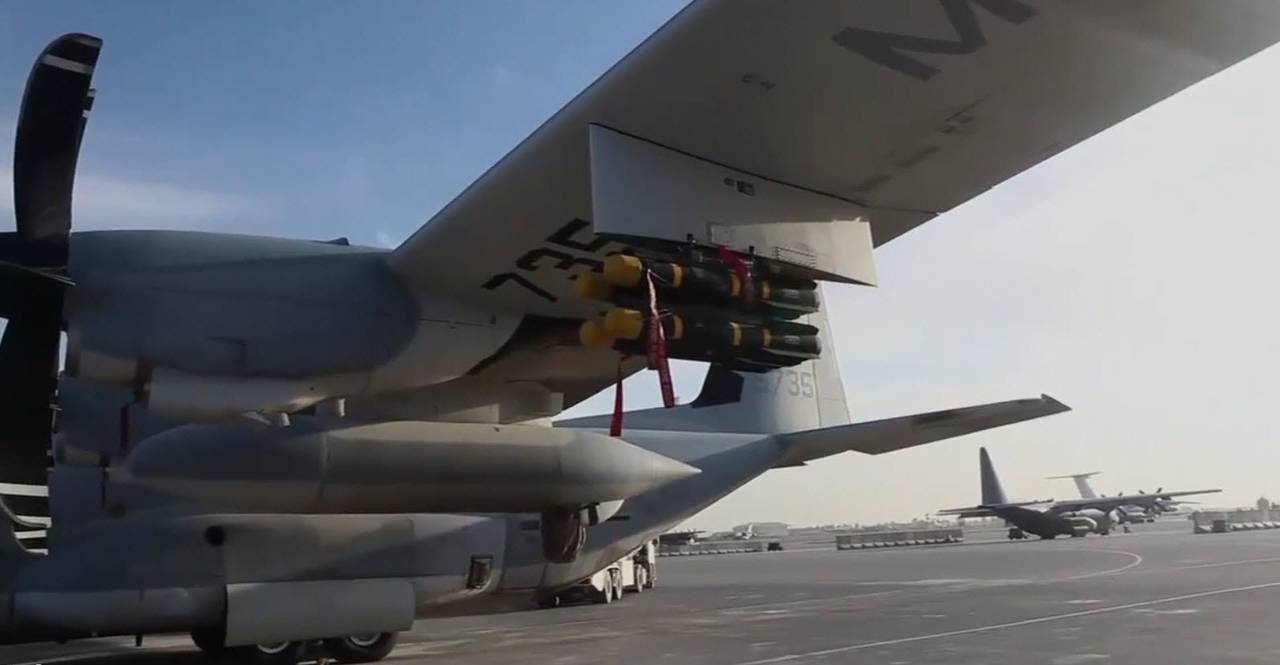
Recently there has been a tendency to create "counter-insurgency" machines based on averages, light military transport aircraft and attack by setting them quickly assembled modules with artillery weapons, suspension assemblies and precision munitions lung appropriate equipment exploration and guidance.
A striking example of interest in such machines can serve as MC-27J shown at the air show «Farnborough». It is made on the basis of military transporter C-27J Spartan.
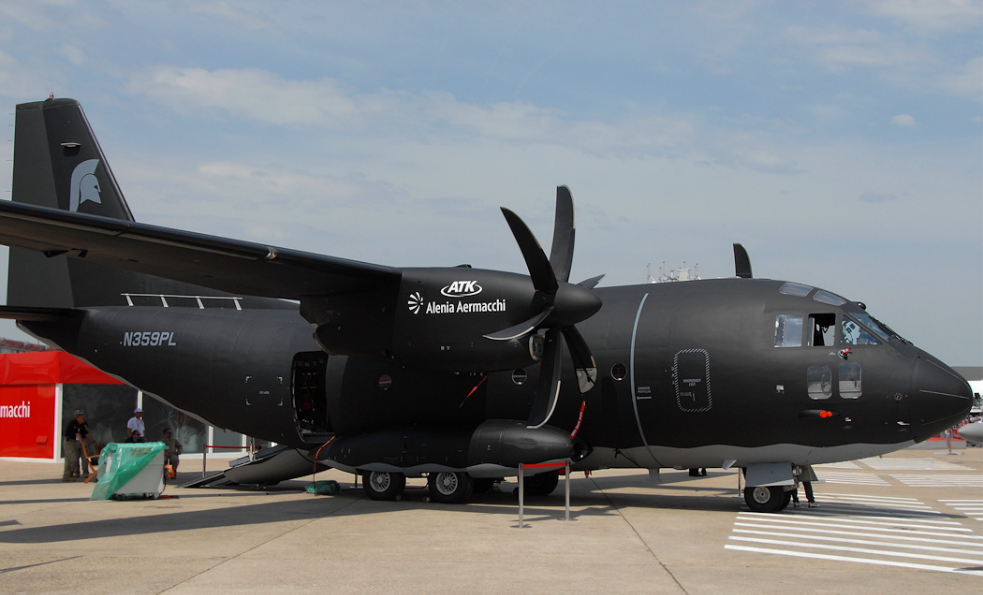
MC-27J
"The main caliber" of the armed aircraft is 30-mm automatic cannon «ATK GAU-23", which is a modification tools «Mk 44 Bushmaster».
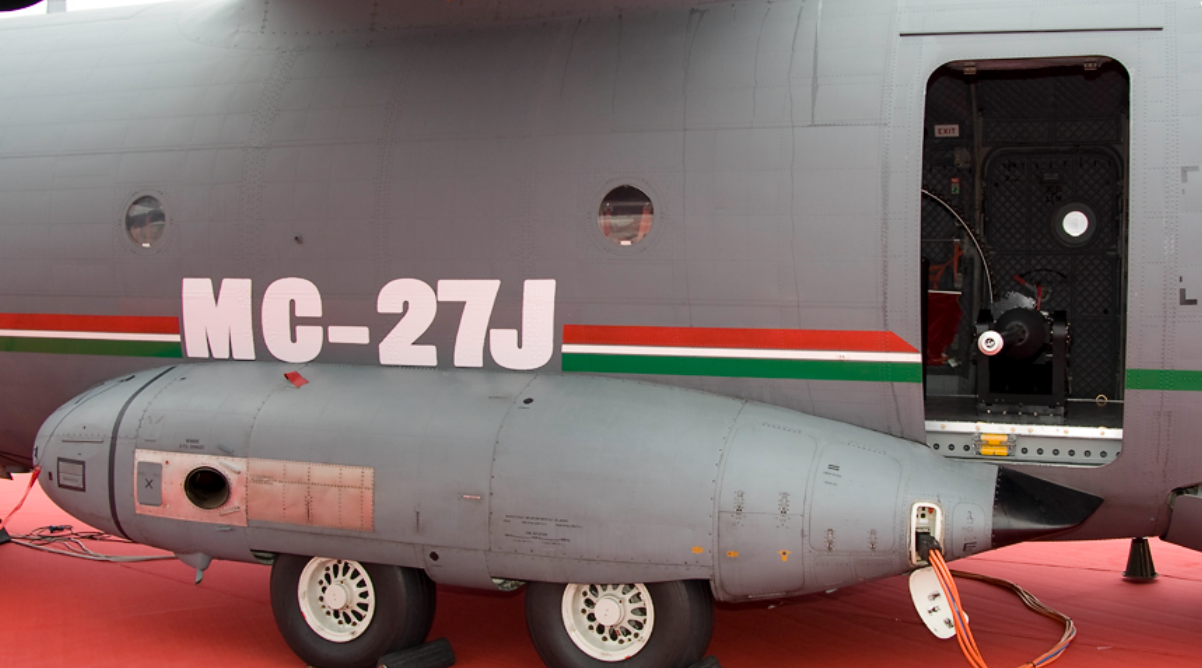
Artillery system mounted in the cargo aircraft. Fires of the cargo door on the left side.
On the pages of "Military Review" repeatedly expressed hopelessness manned "counterinsurgency" Aviation and supposedly imminent emergency replacement light attack and "ganshipov" drones and more speed and better protected stormtroopers. However, in practice there is just the opposite.
So in the United States will soon be writing off the last remaining armed with "classic" A-10 attack aircraft "Thunderbolt 2". Bet on armed drones "middle class" such as MQ-1 Predator and MQ-9 Reaper is not paid off in full.
The undoubted advantage of UAVs are lower operating costs and a lack of risk of death or capture of the pilot in case of shooting down. At the same time the loss of drones in combat zones have been very significant. At the request of the U.S. military, as of 2010 was lost over 70 MQ-1/RQ-1 Predator. In the same 2010, each "Predator" costing U.S. Department of Defense at $ 4.03 million Te savings at relatively low operating costs finances were in large part used to purchase new UAV to replace the lost.
Shock drones capable for a long time to conduct patrols have been very successful tool liquidation ringleaders "Al-Qaeda", but little ammunition weapons on board (two AGM-114 "Hellfire") does not allow to destroy multiple targets or hamper enemy action. Also, these missiles because of insufficient weight warhead ineffective against caves and strong capital structures. Communication lines and data transmission American UAV proved vulnerable to interference and interception of broadcast information. Inability shock drones if necessary to perform sharp maneuvers and maximum flak lightweight design makes them highly vulnerable even in case of minor injuries.
Another important factor is the large capacity light attack compared to the UAV for this indicator is only surpassed by their strategic reconnaissance unmanned RQ-4 "Global Hawk". In terms of resource and strength of the airframe, application flexibility and resistance to combat damages manned aircraft while vastly superior unmanned.
Modern UAVs, their avionics, control points and software belong to the "critical technologies", which the U.S. share is not very willingly. So Americans easier to deliver to its allies in the "war against terror" light "counterinsurgency" stormtroopers, from which can be applied to a wider range compared to the UAV aircraft armament.
Sources:
http://www.militaryparitet.com
http://www.cofe.ru/avia
http://www.ahrlac.com
==============================
0