


- Beranda
- Berita Luar Negeri
How China Became Pakistan's Partner in Jihadist Terror
...


TS
lickmyballs
How China Became Pakistan's Partner in Jihadist Terror
China blocks international efforts to sanction Pakistan's Islamist terrorists, who foment insurgencies on India's borders and export their violent, deeply anti-Semitic jihad to the West. This is why
Shrenik Rao12:17
On 14 February 2019, a 20-year-old suicide bomber, identified as Adil Ahmed Dhar, rammed an explosive-laden vehicle into a bus carrying Indian paramilitary personnel in Jammu and Kashmir. It was one of the deadliest terror attacks in three decades, killing 44 and critically injuring many others.
A Pakistan-based jihadi terrorist group, Jaish-e-Muhammad ("Army of Muhammed"), claimed responsibility for the attack.
Founded in 2000 by Maulana Masood Azhar – a portly and bespectacled radical Islamist cleric – at the behest of Pakistan’s military establishment, Jaish-e-Muhammad has close financial and operational links with the Taliban, Al-Qaeda, Lashkar-e-Taiba - and anti-Shia groups such as the Lashkar-e-Jhangvi/Sipah-e-Sahaba-e-Pakistan.
The United Nations, the United States, the United Kingdom, France, Australia, India, Russia, the UAE and several other countries have banned the Jaish-e-Muhammad.
Despite volumes of evidence – news reports, academic studies, intelligence reports – the United Nations Security Council has failed to put Masood Azhar on its 1267/1373 list of banned terrorists.
Why? China.
permanent member of the UN Security Council, Beijing has consistently vetoed the UN Security Council efforts to get Masood Azhar on its list of banned terrorists. In 2018, 14 out of 15 members of the Security Council, including Saudi Arabia, supported putting Masood Azhar under the UN sanctions list. China – as a permanent member of the UN Security Council with the power to prevent the adoption of a substantive draft council resolution, regardless of otherwise unanimous international support – was the only member to block it.
That Pakistan is a fertile ground for terror networks is a well-known fact. But why would China tacitly support jihadi terrorists?
On paper, China reiterates its "commitment" to fight terrorism.
However, keeping India distracted – by requiring it to deal with terrorism and its aftermath - is in China’s interest.
China regards India as a potential challenger for strategic and economic leadership in Asia, and is committed to quashing those ambitions. Implicitly supporting terrorism and insurgency in India is the easiest, cheapest and most effective ways to accomplish this task.
China therefore has a vested interested in insurgencies targeting India's territorial integrity. Its International Institute for Strategic Studies published a policy document in 2009 arguing that China should make an effort to break India into 20 to 30 independent states with the help of "friendly countries" such as Pakistan, Bangladesh, Nepal and Bhutan.
That China vetoes Masood Azhar from being on the sanctions list and supports Paresh Baruah, the leader of the United Liberation Front of Assam (ULFA), an insurgency group in the North Eastern state of Assam, further provides evidence of China’s intention to keep India distracted by insurgent terrorism.
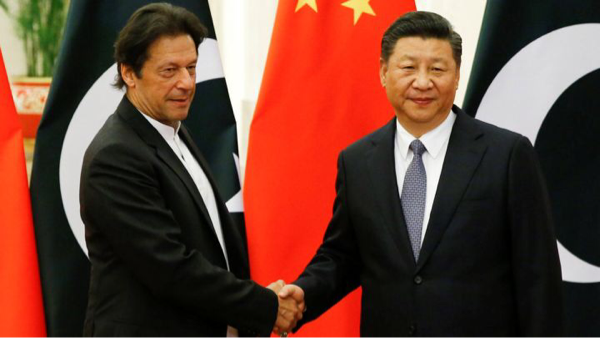
China's appeasement of Masood Azhar strengthens India’s case against Pakistan as the hub of global terror groups. But Beijing has good reason to play on Pakistan's side.
By blocking Azhar as a UN designated terrorist, China - which has, on several occasions, explicitly stated that it wants to be Pakistan’s "all-weather strategic partner"- has gained Pakistan’s subservient loyalty. In this case, blocking Azhar, a person close to Pakistan’s military, is a powerful symbolic gesture and token of support for Pakistan in times of trouble. Masood Azhar is just a pawn in China’s larger geo-strategic game.
In return what China gets is a Pakistani government willing to prostrate itself in front of the Chinese. Such posturing is evident in the Pakistani ambassador to Beijing’s sycophantic declaration that the relationship between the two countries is ‘"higher than the mountains, deeper than the oceans, stronger than steel, dearer than eyesight, sweeter than honey."
This subservience – and desperation – to challenge India’s growing power in the global arena is reflected in Pakistan offering the Gwadar port to China to use as a naval base. The Gwadar port is an alternative to sea routes from Africa and West Asia through the South China Sea. China has pledged to invest $51 billion in an economic corridor that runs across the entire length of Pakistan, connecting the Gwadar port to China’s Xinjiang region. China also gets access to Pakistan’s natural resources.
Pakistan is also China’s port of call for support and mediation with groups such as the Organization of Islamic Cooperation. In the past, Pakistan supported China in the OIC against Beijing’s krackdown on its Muslim Uighur community, which includes concentration camps and the demonization of the Uighur community as "terrorists." Pakistan has also loyally supported China at the Non-Aligned Movement’s meetings regarding its aggressive conduct in the South China Sea.
Strategically, China uses Pakistan to counter Indian power in the region, while Islamabad gains access to civilian and military resources to balance Indian might in the sub-continent – and to desperately needed funds.
This "You scratch my back, I'll scratch yours" agreement between China and Pakistan is one of the key reasons why terrorist organizations such as Jaish-e-Muhammad are able to bypass international sanctions, cultivate insurgent movements and get away with terrorism.
That Beijing, a permanent member of the UN Security Council, is complicit in abetting terrorism by protecting a murderous jihadi who has committed crimes against humanity, in contravention of the UN's own principles, exposes the deep faults in the international system. And it exposes the hypocrisy of a superpower like China.
The only way to force rogue states like Pakistan to end their support for jihadi terrorist activities is by sanctioning terrorist groups and their international sponsors. And if economic and political sanctions don't work, then, perhaps military options would.
https://www.haaretz.com/amp/world-ne...mpression=true
Jihadist dan komunis bahu membahu ngerecokin india
indihe jgn mau kalah lah
itu muslim uighur di support rompi biar pd mleduk di daratan menlen wkwkwkkkk
Shrenik Rao12:17
On 14 February 2019, a 20-year-old suicide bomber, identified as Adil Ahmed Dhar, rammed an explosive-laden vehicle into a bus carrying Indian paramilitary personnel in Jammu and Kashmir. It was one of the deadliest terror attacks in three decades, killing 44 and critically injuring many others.
A Pakistan-based jihadi terrorist group, Jaish-e-Muhammad ("Army of Muhammed"), claimed responsibility for the attack.
Founded in 2000 by Maulana Masood Azhar – a portly and bespectacled radical Islamist cleric – at the behest of Pakistan’s military establishment, Jaish-e-Muhammad has close financial and operational links with the Taliban, Al-Qaeda, Lashkar-e-Taiba - and anti-Shia groups such as the Lashkar-e-Jhangvi/Sipah-e-Sahaba-e-Pakistan.
The United Nations, the United States, the United Kingdom, France, Australia, India, Russia, the UAE and several other countries have banned the Jaish-e-Muhammad.
Despite volumes of evidence – news reports, academic studies, intelligence reports – the United Nations Security Council has failed to put Masood Azhar on its 1267/1373 list of banned terrorists.
Why? China.
permanent member of the UN Security Council, Beijing has consistently vetoed the UN Security Council efforts to get Masood Azhar on its list of banned terrorists. In 2018, 14 out of 15 members of the Security Council, including Saudi Arabia, supported putting Masood Azhar under the UN sanctions list. China – as a permanent member of the UN Security Council with the power to prevent the adoption of a substantive draft council resolution, regardless of otherwise unanimous international support – was the only member to block it.
That Pakistan is a fertile ground for terror networks is a well-known fact. But why would China tacitly support jihadi terrorists?
On paper, China reiterates its "commitment" to fight terrorism.
However, keeping India distracted – by requiring it to deal with terrorism and its aftermath - is in China’s interest.
China regards India as a potential challenger for strategic and economic leadership in Asia, and is committed to quashing those ambitions. Implicitly supporting terrorism and insurgency in India is the easiest, cheapest and most effective ways to accomplish this task.
China therefore has a vested interested in insurgencies targeting India's territorial integrity. Its International Institute for Strategic Studies published a policy document in 2009 arguing that China should make an effort to break India into 20 to 30 independent states with the help of "friendly countries" such as Pakistan, Bangladesh, Nepal and Bhutan.
That China vetoes Masood Azhar from being on the sanctions list and supports Paresh Baruah, the leader of the United Liberation Front of Assam (ULFA), an insurgency group in the North Eastern state of Assam, further provides evidence of China’s intention to keep India distracted by insurgent terrorism.
China's appeasement of Masood Azhar strengthens India’s case against Pakistan as the hub of global terror groups. But Beijing has good reason to play on Pakistan's side.
By blocking Azhar as a UN designated terrorist, China - which has, on several occasions, explicitly stated that it wants to be Pakistan’s "all-weather strategic partner"- has gained Pakistan’s subservient loyalty. In this case, blocking Azhar, a person close to Pakistan’s military, is a powerful symbolic gesture and token of support for Pakistan in times of trouble. Masood Azhar is just a pawn in China’s larger geo-strategic game.
In return what China gets is a Pakistani government willing to prostrate itself in front of the Chinese. Such posturing is evident in the Pakistani ambassador to Beijing’s sycophantic declaration that the relationship between the two countries is ‘"higher than the mountains, deeper than the oceans, stronger than steel, dearer than eyesight, sweeter than honey."
This subservience – and desperation – to challenge India’s growing power in the global arena is reflected in Pakistan offering the Gwadar port to China to use as a naval base. The Gwadar port is an alternative to sea routes from Africa and West Asia through the South China Sea. China has pledged to invest $51 billion in an economic corridor that runs across the entire length of Pakistan, connecting the Gwadar port to China’s Xinjiang region. China also gets access to Pakistan’s natural resources.
Pakistan is also China’s port of call for support and mediation with groups such as the Organization of Islamic Cooperation. In the past, Pakistan supported China in the OIC against Beijing’s krackdown on its Muslim Uighur community, which includes concentration camps and the demonization of the Uighur community as "terrorists." Pakistan has also loyally supported China at the Non-Aligned Movement’s meetings regarding its aggressive conduct in the South China Sea.
Strategically, China uses Pakistan to counter Indian power in the region, while Islamabad gains access to civilian and military resources to balance Indian might in the sub-continent – and to desperately needed funds.
This "You scratch my back, I'll scratch yours" agreement between China and Pakistan is one of the key reasons why terrorist organizations such as Jaish-e-Muhammad are able to bypass international sanctions, cultivate insurgent movements and get away with terrorism.
That Beijing, a permanent member of the UN Security Council, is complicit in abetting terrorism by protecting a murderous jihadi who has committed crimes against humanity, in contravention of the UN's own principles, exposes the deep faults in the international system. And it exposes the hypocrisy of a superpower like China.
The only way to force rogue states like Pakistan to end their support for jihadi terrorist activities is by sanctioning terrorist groups and their international sponsors. And if economic and political sanctions don't work, then, perhaps military options would.
https://www.haaretz.com/amp/world-ne...mpression=true
Jihadist dan komunis bahu membahu ngerecokin india
indihe jgn mau kalah lah
itu muslim uighur di support rompi biar pd mleduk di daratan menlen wkwkwkkkk

sebelahblog memberi reputasi
3
1.6K
17

Komentar yang asik ya
Mari bergabung, dapatkan informasi dan teman baru!

Berita Luar Negeri
82.2KThread•21.1KAnggota
Urutkan
Terlama
Komentar yang asik ya