




TS
boleroes11
Shinano the greater Japan Carier.
(History) Shinano the Greater Carier.
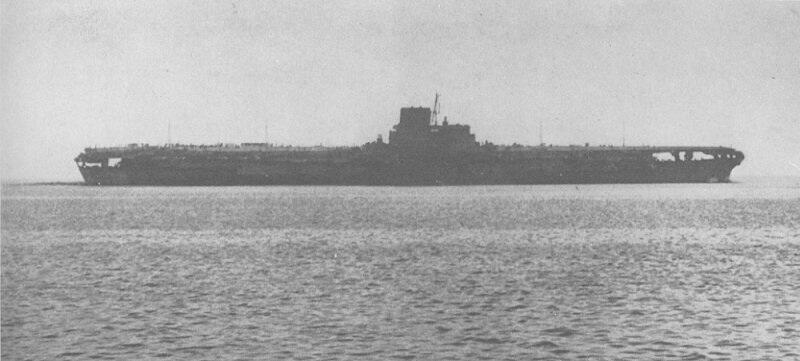
An old Japanese proverb says: "In the world created three largest and most useless things - Great Wall of China, the Egyptian pyramids and Japanese battleships class" Yamato ". And it's true, the largest battleship in the history of humanity - these indestructible monster tysyachetonnye steel giants - have not been able to fully realize their potential, and they actually appeared at sunset era dreadnoughts when replaced has come a new striking force Fleet - aircraft carriers.
Total was laid four ships of this class. Only two of them, "Yamato" and "Musashi," were completed and participated in combat operations of the Imperial Navy, the fourth (building number 111) was pulled on the stocks, but the third, № 110 ... With the third left is interesting, but tragic story . However, first things first.
After the defeat at the Battle of Midway the Japanese fleet just lacked carriers. Still, losing one battle 4 top heavy aircraft carrier and nearly 250 aircraft - is very, very noticeable! And this had to do something. Given the relatively low rate of shipbuilding in Japan and material shortages, it was decided to urgently convert existing ships (mostly passenger liners) or unfinished projects in a sort of ersatz aviamatki. Attracted the attention of admirals ready for 50% third-class ship "Yamato» - № 110. Awareness of the futility of battleships in the Pacific has already come, and money for the completion was not particularly so in the summer of 1942 to finish building number 110 started already as heavy aircraft carrier and they called his name, "Shinano". Heavy it was literally all ... Starting from displacement, ending headache engineers about how good of them to make at least a battleship carrier mediocre.
Speaking of displacement. Ubiquitous information about the full displacement ship 72,000 tons, almost the same as the full weight of the battleship-classmate. Digital questionable, since the thickness of the reservation "Shinano" was reduced GK towers on it was not a massive superstructure - too. However, there was armored flight deck, additional cargo supply, fuel tanks and planes, but they are unlikely to dovesili aircraft carrying the same weight with a linear. Probably the real figure full displacement floats near 65,000, which is also very, very impressive. Instead, the largest in the world and useless battleship "Shinano" was destined to become the biggest and useless aircraft carrier in the world. And here's why.
Launching new ship was held October 8, 1944, continued outfitting work urgently on a naval shipyard in Yokosuka, but by November 44th the American B-29 Superfortress already falls short of the shipyard and were potentially dangerous to the ship. Management has decided to transfer him from harm's way to the base at Kure, which is on the other side of Japan, and already there to make final finishing and acceptance. No sooner said than done. Climbed aboard the 2176 sailors and officers, 300 shipyard workers and about 40 different civil. While the carrier is ready to sail, all unoccupied hand riveting, cooked, painted, caulked, in general, brought to mind the ship machinery and systems. November 19, 1944 "Shinano" officially entered the fleet.
The pride of the fleet should command only the best of the best. Such helpful Captain Toshio Abe. Just two years ago, when he commanded the Midway division of destroyers. Here he was standing on the bridge of the ship itself-in the world. Such an incredible career is quite clear and gives an idea about the overall situation in the ship's crew. No, sailors his case, of course, know this, but many of them were "green" uchebok graduates, and others lacked experience or skill, or proper morale.
Captain Abe informed that air cover from the bank will not, and a private wing was still not filled. The only thing that could fly aboard the aircraft carrier was passing loads of 50 guided missiles "Oka", but they are not good defensive tool. As an escort destroyer escort identified three ("Isokadze", "Yukikaze" and "Hamakadze"), and two of them had problems with the radio and sonar equipment, which did not manage to fix after the Battle of Leyte Gulf. Very nonchalant attitude to "the last pole fleet." The only hope for safe swimming was the night shift.
November 28, 1944 at 18 pm on a fine warm evening (and they have there in late November, about 10) "Shinano" left Tokyo harbor and went to his first combat sortie. The sky shone almost full moon, which provided excellent visibility as observers friendly, and not so. Stepping back some distance from the port, the ship took the course and 210 ASW zigzag speed of about 20 knots (could not give more, worked only 8 boilers of 12) went to the port of destination, but this time in the galley reigned feast. Fed the traditional maiden voyage miso soup of black beans were also delicious corn tortillas, cakes and fruit. An incredible luxury for the war-ridden country.
Aboard the U.S. Navy submarine "Archerfish" the same evening gloom prevailed. For the past few days did not show any one piece of plate, even remotely similar to the target. It was their fifth war patrol, and the sailors just hands itched to make some feat quickly, get on the medal and go ashore to celebrate this thing. The boat was large enough, 95 meters in length and 2,400 tons submerged displacement. Maximum speed on the passport reached 20 knots, but after five hikes available maximum was about 19. Divine Providence has long been not on the side of the Japanese. So on that November evening when faulty radar submarine launched the same, he immediately found 12 miles to the northeast. Initially, the goal mistakenly identified as an island, but when it became clear that the "island" moves submarine captain Joseph Enright rubbed his hands gleefully. What could be so great, except for the thick tankers and tankers - slow and easy targets ... And as part of escort noticed only one destroyer.
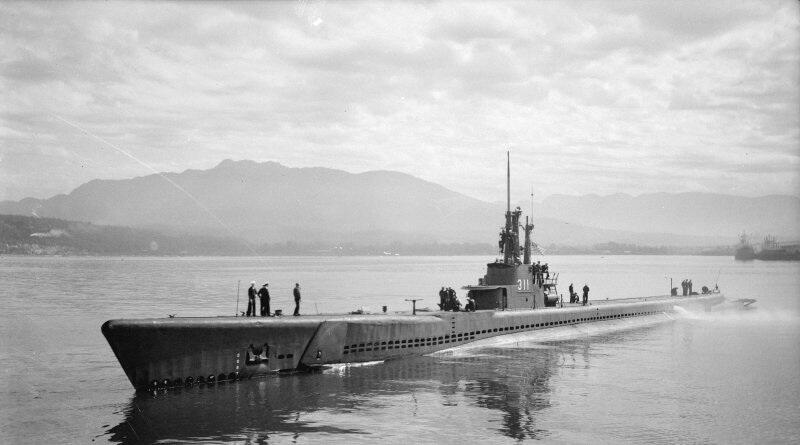
Despite the clear weather, "Archerfishe" unambiguously identified as the carrier only goal at 21:40. The situation changed drastically. Warship - is not helpless nalivnik slow and dangerous opponent with a strong escort escort. In such ambiguous situations Captain Enright decides to go to Dogon course followed by an attempt to make a torpedo attack target. By this time, both the Americans and the Japanese exactly aware of the presence of each other and the relative location of the enemy. At any moment on a daring attack submarine could produce destroyers cover but courageous crew surfaced squeezed out of its "fish" all possible and impossible, risking breakage of diesel in the hope of a good volley. At some point, the destroyer "Isokadze" leaves the order and 35-nodal course goes straight to the boat. The crew of the submarine is ready to dive, to turn away, but in the last seconds of Captain Abe orders the destroyer back in operation. Likely to "Shinano" felt so brazen actions boat just a red herring, and fearing an attack of a wolf pack, Toshio prefers to keep all the available forces with him, hoping to speed the convoy, but, although the speed and higher anti-zigzag, which is a compound does not come off "Archerfisha."
At 23:20 due to overheating of the propeller shaft bearing "Shinano" reduces the speed to 18 knots. The boat is slowly beginning to catch up. At 3:05 am, "Archerfish" finally goes on more or less comfortable distance and rate of attack. Naturally, dives. Lost radar contact with the enemy Japanese, fearing that same attack, lay unexpectedly large turn and roll out ... right course to intercept the submarine at a distance of several hundred meters, just a pistol shot. "Shinano" clearly someone jinxed. Of the six released four torpedoes one after another hit the target. Steadily and relentlessly, right in the middle of the hull on the starboard side. Joseph Enright on his "Fish" dives to 160 meters, and is subjected to an unsuccessful Unsighted (sonars something outside) attack destroyers and im run safely and on an aircraft carrier at this point begins to turn tragedy. The clock - 3:17 am ...
The first torpedo hit in the side of the steering wheel slightly forward, flooded cold stores, and one empty tank for aviation fuel. Also the shock wave killed many sleeping engineers from the technicians, who rested on the watch on the premises above. The second torpedo struck the connection with the propeller shaft housing and flooded the room shafting. The third hit on the starboard side in the area of boiler compartment number 3, flooded it and drowned all on watch subservient. Destruction of housing also led to the beginning of flooding adjacent boiler. The fourth and last flooded compressor station to starboard, storage and flak damage control station number 2. Obviously, such destruction to the sinking ship of this class are clearly insufficient. To drown "Yamato", took 10 torpedoes and 13 bombs. And then he sank after an explosion artpogrebov. "Musashi" received 12 pieces of 10 torpedoes and bombs and too long fought for buoyancy. Had such a situation with a fully combat-ready ship, "Shinano" to be safely reached the port of destination and proceeded to repair, which is likely to end the war would not have ended. But he was not such a vessel. The aircraft carrier was actually unfinished: klinketnye leaky doors, watertight bulkheads poorly consolidated and flowed at the seams, stationary pumps do not work, and hand pumps were not enough, and not all were able to handle them. Situation was exacerbated by the decision of Captain Abe after a torpedo attack go full speed to prevent further ingress of the imaginary wolfpack American submarines. Pressure stream of water at 18 knots go literally pounding carrier under water.
Situation can be briefly summarized: immediately after receiving damage flooding has become uncontrollable. Simply impossible to plug all the holes nekonopachenye for cables and pipes in bulkheads under constant flow of water. The ship was doomed. It remained only to run aground, and it is not certain that would be reached.
At 3:30 roll reached 15 degrees, and then, thanks kontrzatopleniyam portside ship straightened slightly, to 12 degrees, but it was obvious that change the situation anymore.
At 5:00 am the captain gave the order to transfer all civilian shipyards and working on coming up destroyers, as they spread panic and orderly conduct rescue operations. By 6 am roll reached 20 degrees and continued to increase to seven because of the lack of steam engines stopped. Try to take in tow aircraft carrier failed. As the tugs were only small destroyers that just would not pull colossus "Shinano", and the towline was not suitable thickness. At 9:00 boat powered. Roll maintained at 20 °. At 10:18 sounded team to leave the ship, the evacuation, the captain Abe himself and his two lookouts assistant chose to stay and die with the ship. The situation with the rescue crew was exacerbated by the flight deck has touched the water and the huge flows of her rushed through lifts and other technological hatches into the interior, into the abyss pulling people from the ocean surface.
At 10:57, after 17 hours after the release of his first combat sortie, "Shinano" went on board and went to the bottom, stern first, carrying with it the lives of seafarers in 1435. Although the official Japanese version provides data 600-700 dead. It is believed that many were saved using personal flotation device. The truth is probably somewhere in between. Portrait of Emperor saved, secret documents were left in a safe and lie at a depth of 4 km.
Thus ended the tragic story of the world's largest carrier (only 10 years it surpassed in size American "Forrestal"). I should add, emergency mode, simply unprecedented secrecy has led to the fact that until the end of the war, Joseph Enright did not know what sort of "island" he sank. At its expense recorded 28000th "Hayatake" and then only after he described in detail the ship and provided its exploration sketches. By the way, no such hayataki in the Japanese Imperial Navy was not, and instead write captain in record carrier, which, according to intelligence, just could not be, as he was, he wrote another, which, according to the Intelligence existed. And just after the war and finally sorted out on the joys handed Enright Naval Cross for his invaluable contribution, so to speak. Enright, in turn, wrote about the sinking of the "Shinano" the whole book is very decent.
On the "Shinano" watch officer made a detour and observers warned: "Be careful." The duty officer noticed the flashes from the radar beam radar signature and identified them as belonging to the American submarine. Captain Abe found it necessary to inform the escort and increase alertness.
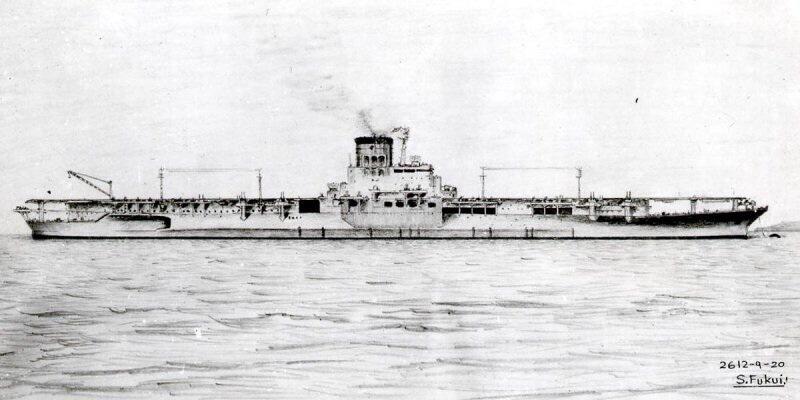
In conclusion, I want to add that the secrecy of an aircraft carrier played him another sad joke: today only two known photographs of the ship. One of them is made with an American spy plane (whose appearance and led to the fateful decision to relocate the ship), and the second - from the shore during sea trials after launching. And, no more reliable picture. Frames November aerofotosemki Yokosuka online there, but they are difficult to find, and the quality does not allow one to consider, where is there is "Shinano".
Source: Copy xpDreamer.
====================
Berkat restorasi "Meiji" Jepang dapat bangkit sebagai raksasa industri dengan technology tinggi.
Mungkinkah kita yg kaya SDA & SDM dan kaya segalanya mampu tampil seperti Jepang kala itu?
Wallahualam bisawab, mungkin next generasi yg di bekali dasar pendidikan nasional yg tinggi akan mampu meraih dan merealisirnya.
Amien.
Salam.
Spoiler for 1:
An old Japanese proverb says: "In the world created three largest and most useless things - Great Wall of China, the Egyptian pyramids and Japanese battleships class" Yamato ". And it's true, the largest battleship in the history of humanity - these indestructible monster tysyachetonnye steel giants - have not been able to fully realize their potential, and they actually appeared at sunset era dreadnoughts when replaced has come a new striking force Fleet - aircraft carriers.
Total was laid four ships of this class. Only two of them, "Yamato" and "Musashi," were completed and participated in combat operations of the Imperial Navy, the fourth (building number 111) was pulled on the stocks, but the third, № 110 ... With the third left is interesting, but tragic story . However, first things first.
After the defeat at the Battle of Midway the Japanese fleet just lacked carriers. Still, losing one battle 4 top heavy aircraft carrier and nearly 250 aircraft - is very, very noticeable! And this had to do something. Given the relatively low rate of shipbuilding in Japan and material shortages, it was decided to urgently convert existing ships (mostly passenger liners) or unfinished projects in a sort of ersatz aviamatki. Attracted the attention of admirals ready for 50% third-class ship "Yamato» - № 110. Awareness of the futility of battleships in the Pacific has already come, and money for the completion was not particularly so in the summer of 1942 to finish building number 110 started already as heavy aircraft carrier and they called his name, "Shinano". Heavy it was literally all ... Starting from displacement, ending headache engineers about how good of them to make at least a battleship carrier mediocre.
Speaking of displacement. Ubiquitous information about the full displacement ship 72,000 tons, almost the same as the full weight of the battleship-classmate. Digital questionable, since the thickness of the reservation "Shinano" was reduced GK towers on it was not a massive superstructure - too. However, there was armored flight deck, additional cargo supply, fuel tanks and planes, but they are unlikely to dovesili aircraft carrying the same weight with a linear. Probably the real figure full displacement floats near 65,000, which is also very, very impressive. Instead, the largest in the world and useless battleship "Shinano" was destined to become the biggest and useless aircraft carrier in the world. And here's why.
Launching new ship was held October 8, 1944, continued outfitting work urgently on a naval shipyard in Yokosuka, but by November 44th the American B-29 Superfortress already falls short of the shipyard and were potentially dangerous to the ship. Management has decided to transfer him from harm's way to the base at Kure, which is on the other side of Japan, and already there to make final finishing and acceptance. No sooner said than done. Climbed aboard the 2176 sailors and officers, 300 shipyard workers and about 40 different civil. While the carrier is ready to sail, all unoccupied hand riveting, cooked, painted, caulked, in general, brought to mind the ship machinery and systems. November 19, 1944 "Shinano" officially entered the fleet.
The pride of the fleet should command only the best of the best. Such helpful Captain Toshio Abe. Just two years ago, when he commanded the Midway division of destroyers. Here he was standing on the bridge of the ship itself-in the world. Such an incredible career is quite clear and gives an idea about the overall situation in the ship's crew. No, sailors his case, of course, know this, but many of them were "green" uchebok graduates, and others lacked experience or skill, or proper morale.
Captain Abe informed that air cover from the bank will not, and a private wing was still not filled. The only thing that could fly aboard the aircraft carrier was passing loads of 50 guided missiles "Oka", but they are not good defensive tool. As an escort destroyer escort identified three ("Isokadze", "Yukikaze" and "Hamakadze"), and two of them had problems with the radio and sonar equipment, which did not manage to fix after the Battle of Leyte Gulf. Very nonchalant attitude to "the last pole fleet." The only hope for safe swimming was the night shift.
November 28, 1944 at 18 pm on a fine warm evening (and they have there in late November, about 10) "Shinano" left Tokyo harbor and went to his first combat sortie. The sky shone almost full moon, which provided excellent visibility as observers friendly, and not so. Stepping back some distance from the port, the ship took the course and 210 ASW zigzag speed of about 20 knots (could not give more, worked only 8 boilers of 12) went to the port of destination, but this time in the galley reigned feast. Fed the traditional maiden voyage miso soup of black beans were also delicious corn tortillas, cakes and fruit. An incredible luxury for the war-ridden country.
Aboard the U.S. Navy submarine "Archerfish" the same evening gloom prevailed. For the past few days did not show any one piece of plate, even remotely similar to the target. It was their fifth war patrol, and the sailors just hands itched to make some feat quickly, get on the medal and go ashore to celebrate this thing. The boat was large enough, 95 meters in length and 2,400 tons submerged displacement. Maximum speed on the passport reached 20 knots, but after five hikes available maximum was about 19. Divine Providence has long been not on the side of the Japanese. So on that November evening when faulty radar submarine launched the same, he immediately found 12 miles to the northeast. Initially, the goal mistakenly identified as an island, but when it became clear that the "island" moves submarine captain Joseph Enright rubbed his hands gleefully. What could be so great, except for the thick tankers and tankers - slow and easy targets ... And as part of escort noticed only one destroyer.
Spoiler for 2:
Despite the clear weather, "Archerfishe" unambiguously identified as the carrier only goal at 21:40. The situation changed drastically. Warship - is not helpless nalivnik slow and dangerous opponent with a strong escort escort. In such ambiguous situations Captain Enright decides to go to Dogon course followed by an attempt to make a torpedo attack target. By this time, both the Americans and the Japanese exactly aware of the presence of each other and the relative location of the enemy. At any moment on a daring attack submarine could produce destroyers cover but courageous crew surfaced squeezed out of its "fish" all possible and impossible, risking breakage of diesel in the hope of a good volley. At some point, the destroyer "Isokadze" leaves the order and 35-nodal course goes straight to the boat. The crew of the submarine is ready to dive, to turn away, but in the last seconds of Captain Abe orders the destroyer back in operation. Likely to "Shinano" felt so brazen actions boat just a red herring, and fearing an attack of a wolf pack, Toshio prefers to keep all the available forces with him, hoping to speed the convoy, but, although the speed and higher anti-zigzag, which is a compound does not come off "Archerfisha."
At 23:20 due to overheating of the propeller shaft bearing "Shinano" reduces the speed to 18 knots. The boat is slowly beginning to catch up. At 3:05 am, "Archerfish" finally goes on more or less comfortable distance and rate of attack. Naturally, dives. Lost radar contact with the enemy Japanese, fearing that same attack, lay unexpectedly large turn and roll out ... right course to intercept the submarine at a distance of several hundred meters, just a pistol shot. "Shinano" clearly someone jinxed. Of the six released four torpedoes one after another hit the target. Steadily and relentlessly, right in the middle of the hull on the starboard side. Joseph Enright on his "Fish" dives to 160 meters, and is subjected to an unsuccessful Unsighted (sonars something outside) attack destroyers and im run safely and on an aircraft carrier at this point begins to turn tragedy. The clock - 3:17 am ...
The first torpedo hit in the side of the steering wheel slightly forward, flooded cold stores, and one empty tank for aviation fuel. Also the shock wave killed many sleeping engineers from the technicians, who rested on the watch on the premises above. The second torpedo struck the connection with the propeller shaft housing and flooded the room shafting. The third hit on the starboard side in the area of boiler compartment number 3, flooded it and drowned all on watch subservient. Destruction of housing also led to the beginning of flooding adjacent boiler. The fourth and last flooded compressor station to starboard, storage and flak damage control station number 2. Obviously, such destruction to the sinking ship of this class are clearly insufficient. To drown "Yamato", took 10 torpedoes and 13 bombs. And then he sank after an explosion artpogrebov. "Musashi" received 12 pieces of 10 torpedoes and bombs and too long fought for buoyancy. Had such a situation with a fully combat-ready ship, "Shinano" to be safely reached the port of destination and proceeded to repair, which is likely to end the war would not have ended. But he was not such a vessel. The aircraft carrier was actually unfinished: klinketnye leaky doors, watertight bulkheads poorly consolidated and flowed at the seams, stationary pumps do not work, and hand pumps were not enough, and not all were able to handle them. Situation was exacerbated by the decision of Captain Abe after a torpedo attack go full speed to prevent further ingress of the imaginary wolfpack American submarines. Pressure stream of water at 18 knots go literally pounding carrier under water.
Situation can be briefly summarized: immediately after receiving damage flooding has become uncontrollable. Simply impossible to plug all the holes nekonopachenye for cables and pipes in bulkheads under constant flow of water. The ship was doomed. It remained only to run aground, and it is not certain that would be reached.
At 3:30 roll reached 15 degrees, and then, thanks kontrzatopleniyam portside ship straightened slightly, to 12 degrees, but it was obvious that change the situation anymore.
At 5:00 am the captain gave the order to transfer all civilian shipyards and working on coming up destroyers, as they spread panic and orderly conduct rescue operations. By 6 am roll reached 20 degrees and continued to increase to seven because of the lack of steam engines stopped. Try to take in tow aircraft carrier failed. As the tugs were only small destroyers that just would not pull colossus "Shinano", and the towline was not suitable thickness. At 9:00 boat powered. Roll maintained at 20 °. At 10:18 sounded team to leave the ship, the evacuation, the captain Abe himself and his two lookouts assistant chose to stay and die with the ship. The situation with the rescue crew was exacerbated by the flight deck has touched the water and the huge flows of her rushed through lifts and other technological hatches into the interior, into the abyss pulling people from the ocean surface.
At 10:57, after 17 hours after the release of his first combat sortie, "Shinano" went on board and went to the bottom, stern first, carrying with it the lives of seafarers in 1435. Although the official Japanese version provides data 600-700 dead. It is believed that many were saved using personal flotation device. The truth is probably somewhere in between. Portrait of Emperor saved, secret documents were left in a safe and lie at a depth of 4 km.
Thus ended the tragic story of the world's largest carrier (only 10 years it surpassed in size American "Forrestal"). I should add, emergency mode, simply unprecedented secrecy has led to the fact that until the end of the war, Joseph Enright did not know what sort of "island" he sank. At its expense recorded 28000th "Hayatake" and then only after he described in detail the ship and provided its exploration sketches. By the way, no such hayataki in the Japanese Imperial Navy was not, and instead write captain in record carrier, which, according to intelligence, just could not be, as he was, he wrote another, which, according to the Intelligence existed. And just after the war and finally sorted out on the joys handed Enright Naval Cross for his invaluable contribution, so to speak. Enright, in turn, wrote about the sinking of the "Shinano" the whole book is very decent.
On the "Shinano" watch officer made a detour and observers warned: "Be careful." The duty officer noticed the flashes from the radar beam radar signature and identified them as belonging to the American submarine. Captain Abe found it necessary to inform the escort and increase alertness.
In conclusion, I want to add that the secrecy of an aircraft carrier played him another sad joke: today only two known photographs of the ship. One of them is made with an American spy plane (whose appearance and led to the fateful decision to relocate the ship), and the second - from the shore during sea trials after launching. And, no more reliable picture. Frames November aerofotosemki Yokosuka online there, but they are difficult to find, and the quality does not allow one to consider, where is there is "Shinano".
Spoiler for 3:
Source: Copy xpDreamer.
====================
Berkat restorasi "Meiji" Jepang dapat bangkit sebagai raksasa industri dengan technology tinggi.
Mungkinkah kita yg kaya SDA & SDM dan kaya segalanya mampu tampil seperti Jepang kala itu?
Wallahualam bisawab, mungkin next generasi yg di bekali dasar pendidikan nasional yg tinggi akan mampu meraih dan merealisirnya.
Amien.
Salam.
0
4.6K
11
Thread Digembok
Mari bergabung, dapatkan informasi dan teman baru!

Militer
20.4KThread•10.8KAnggota
Urutkan
Terlama
Thread Digembok